

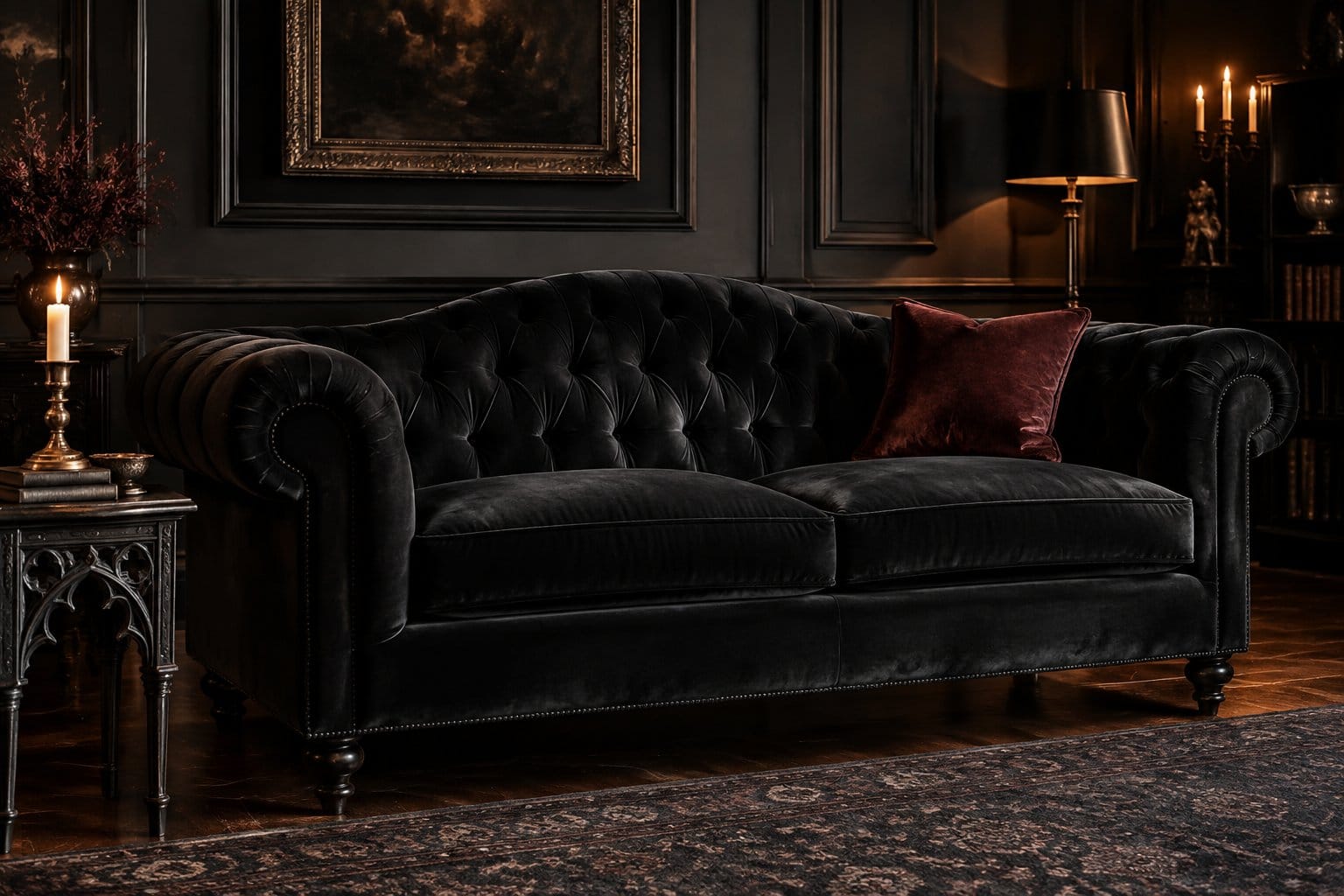
A gothic home feels like stepping into a good novel. The light is low and warm, the fabrics are heavy, and every corner holds something worth a second look. That mood is easier to build than most people think, and you don’t need a castle budget to get there.
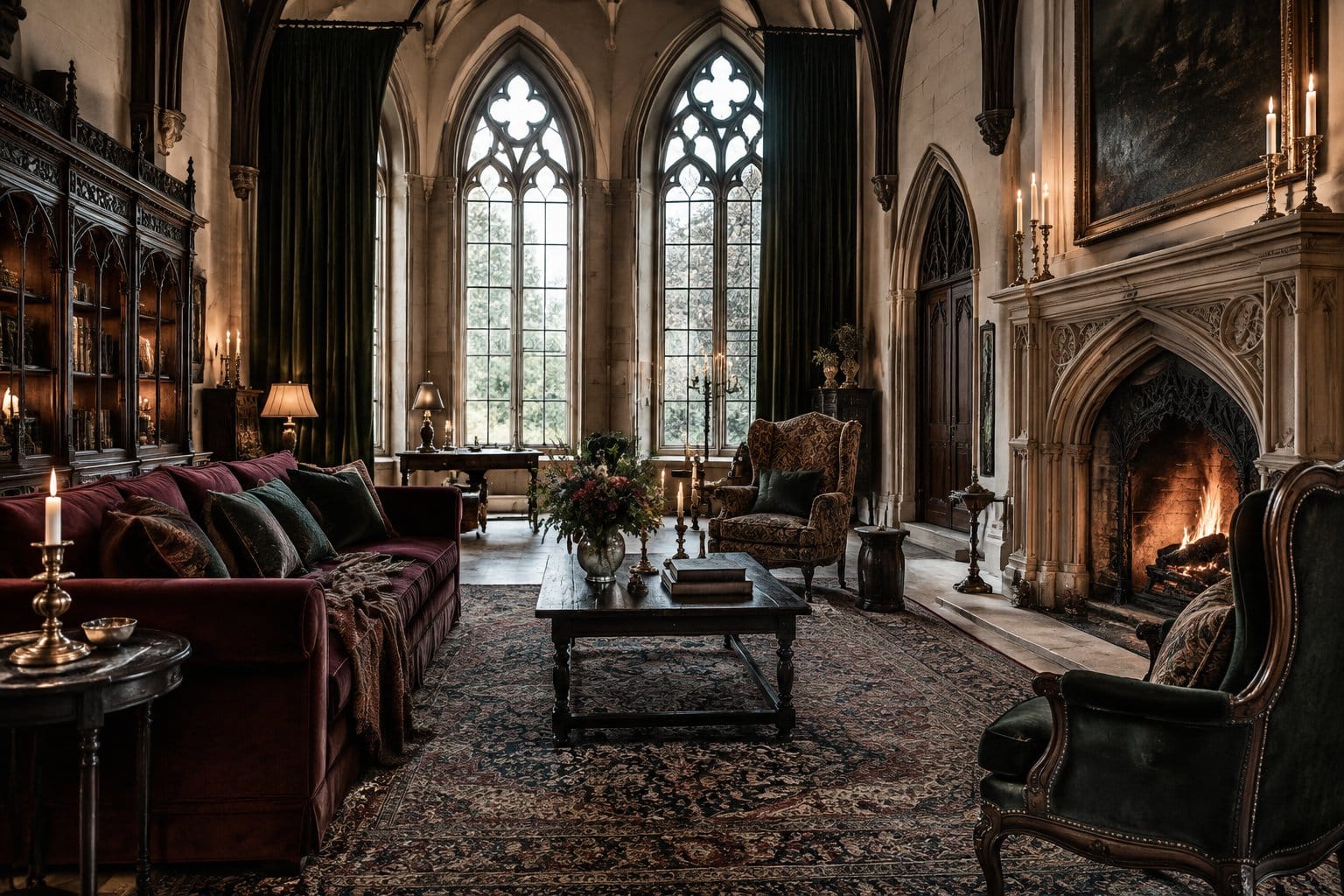
The fastest way to get a moody gothic look is to pair one deep wall color, like burgundy, with one dramatic dark statement piece (a velvet sofa, carved cabinet, or iron chandelier) and warm, low light. Everything else on this list builds on that base. Some ideas cost less than a nice dinner out. Others involve a contractor and a real budget.
The 25 ideas below cover living rooms, kitchens, bedrooms, and bathrooms, and they run from renter-friendly window film to full cabinetry swaps. Each one comes with a practical first step, a frank take on cost, and a note on how much visual weight it adds. Pick the one that excites you most and start there this week.
1) Deep Burgundy Accent Walls
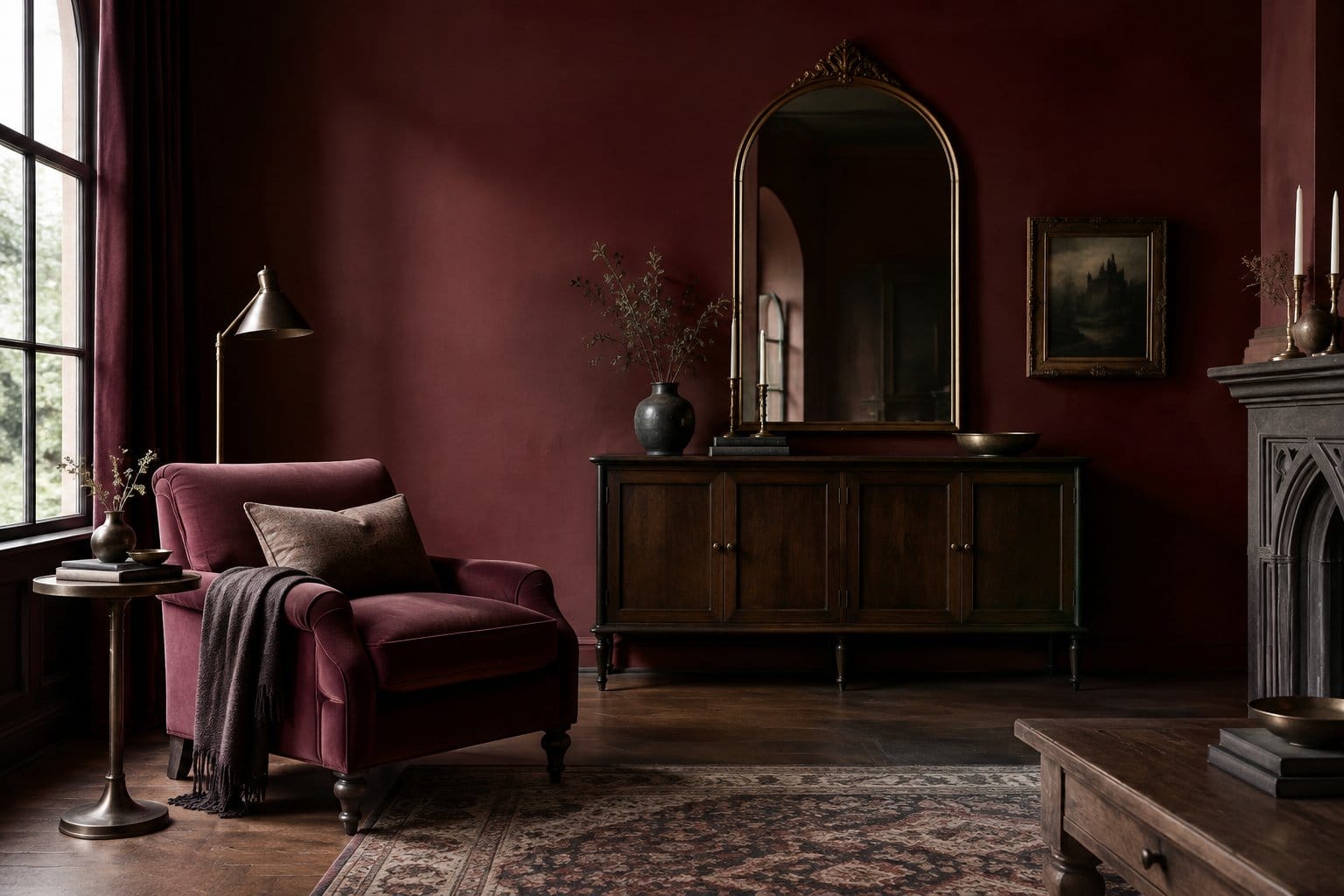
Burgundy is the easiest entry point into gothic style because it reads rich and dark without feeling like a cave. It warms up at night and looks almost like old wine in lamplight.
Start here: Paint the wall behind your sofa or bed, since that’s where your eye lands first. A gallon covers about one average wall with two coats.
Cost: Low. Paint, a roller, and tape run well under $100 for one wall.
Visual weight: Medium to heavy. One wall is plenty in a small room.
A few tips from experience:
- Choose an eggshell or matte finish. Gloss shows every dent in a dark color.
- Test a large swatch and look at it at night. Burgundy can turn brown under cool bulbs.
- Use a tinted primer. It cuts down the number of coats you’ll need.
Pair it with brass, black iron, or dark wood. Crisp white trim looks harsh next to burgundy, so try a soft cream or a charcoal instead.
2) Black Velvet Chesterfield Sofa
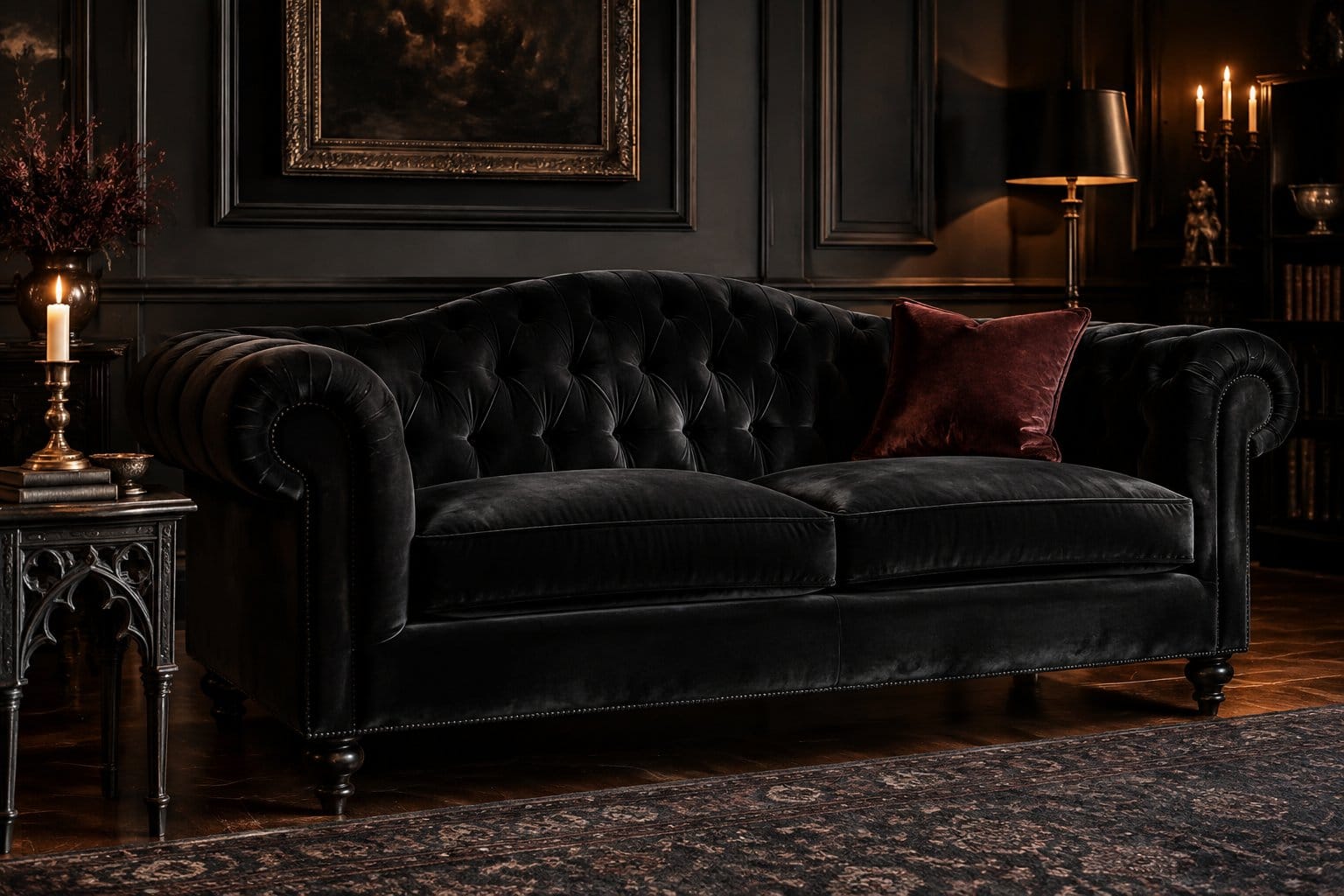
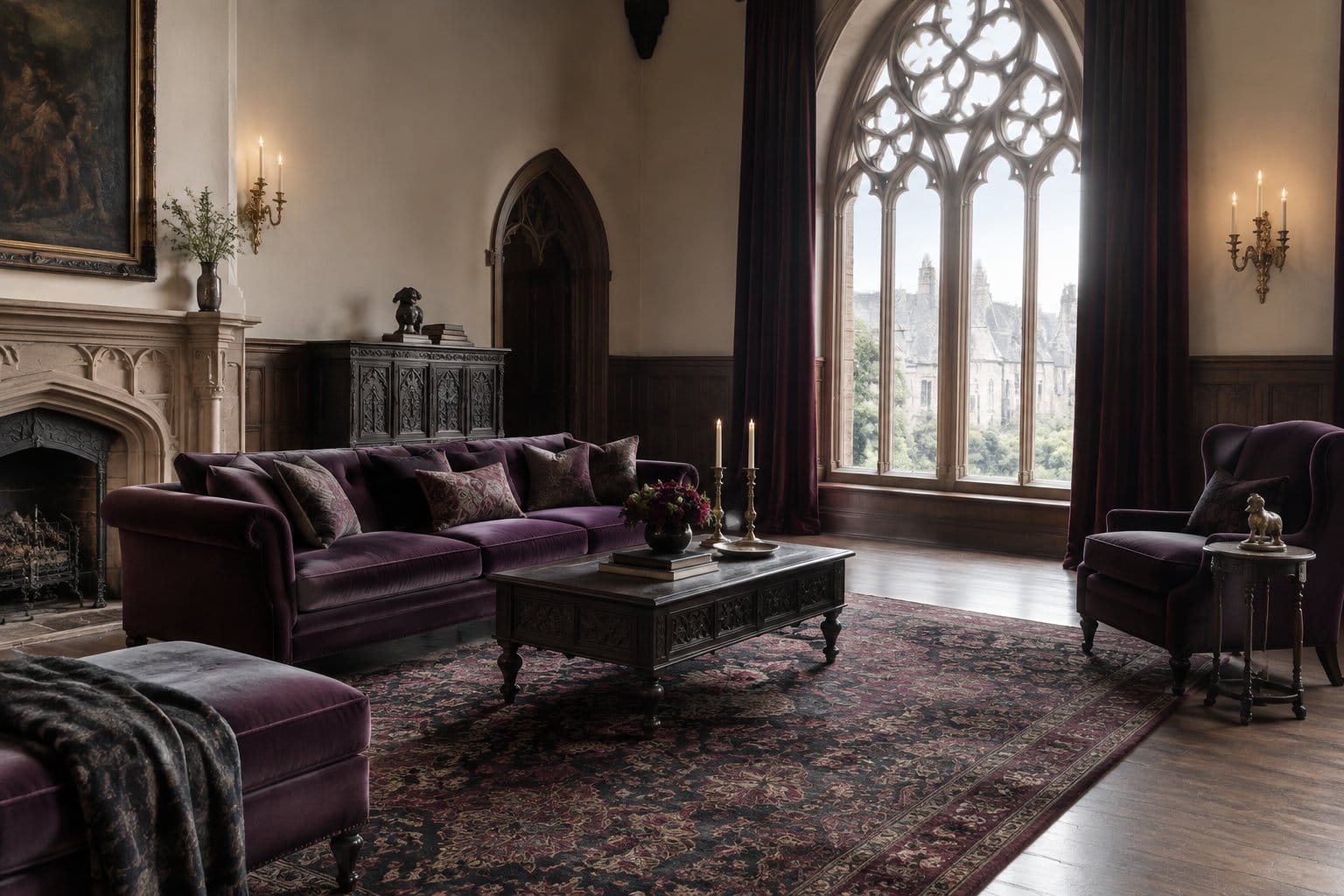
If you want one piece that says “gothic” the moment someone walks in, make it a black velvet Chesterfield. The deep button tufting and rolled arms feel Victorian, and velvet catches light in a way flat fabrics can’t.
Start here: Measure your wall and doorways before you shop. Chesterfields are wide and their arms don’t shrink. An 82-inch black velvet Chesterfield with a deep seat fits most living rooms and still feels comfortable for movie nights.
Cost: Mid to high, depending on frame quality.
Visual weight: Heavy. This is your anchor, so keep nearby pieces simpler.
Real talk on velvet: pet hair sticks to it, and it shows crushed spots. A lint roller and a soft brush fix both in about two minutes. Toss on a pillow in burgundy or emerald so the sofa doesn’t disappear into a dark wall.
3) Wrought-Iron Candle-Style Chandelier
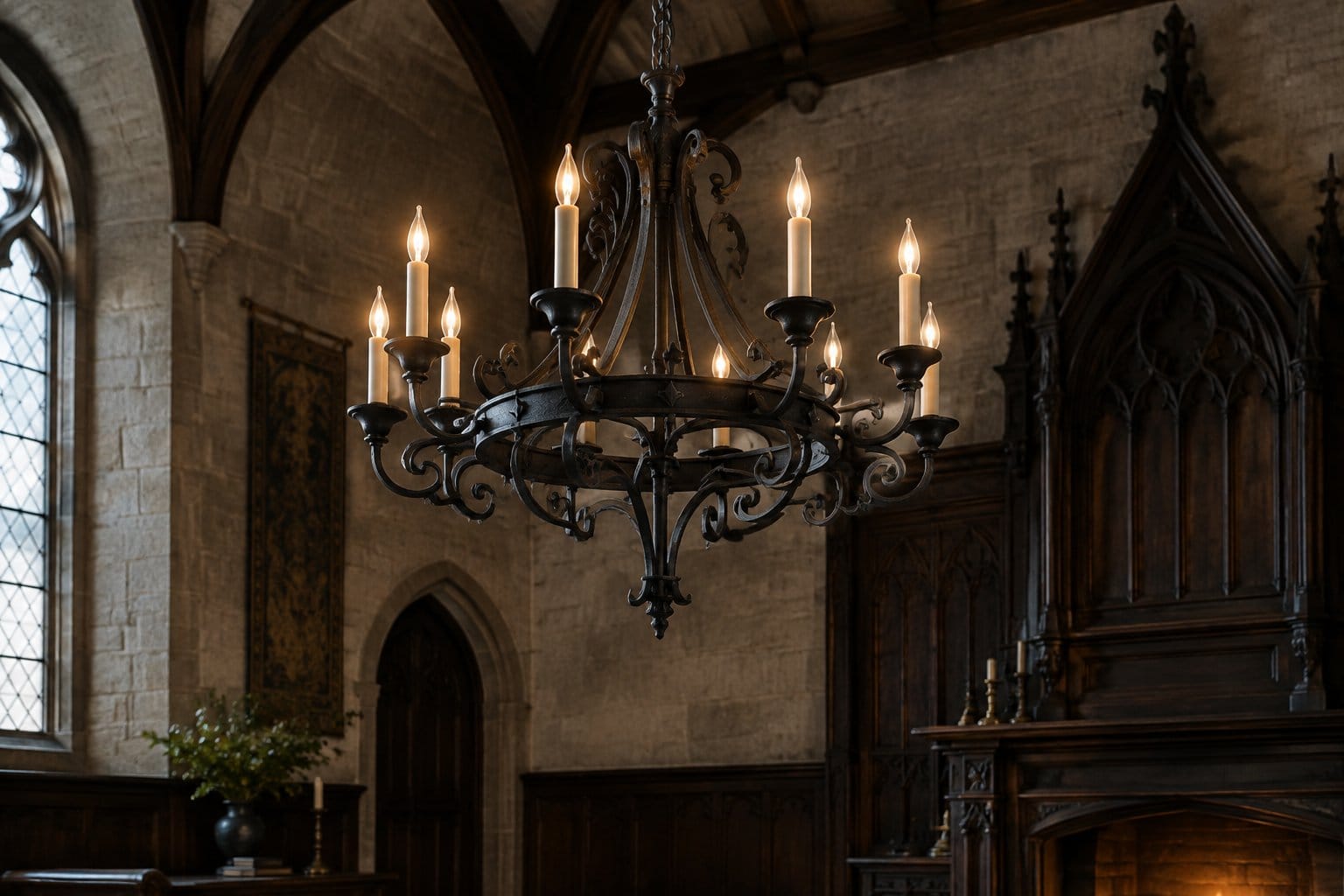
A black iron chandelier with candle-style arms gives you that great-hall feeling without any open flame. It pulls the eye upward, which makes a room feel taller.
Start here: Replace an existing ceiling fixture. Swapping a fixture that’s already there is simpler than adding a new one, and the Electrical Safety Foundation International notes that replacing a light fixture often skips the permit, while adding one where none existed usually needs one.
Cost: Low to mid for the fixture. Add an electrician’s fee if you aren’t comfortable wiring.
Visual weight: Medium. Iron looks light from below but reads bold against a pale ceiling.
If you like a bit of sparkle, a black crystal chandelier in a modern gothic style mixes iron with dangling crystals. Use flame-tip LED bulbs at 2200K to 2700K for a candlelit glow, and add a dimmer. You’ll use it every evening.
4) Pointed-Arch Wall Mirror
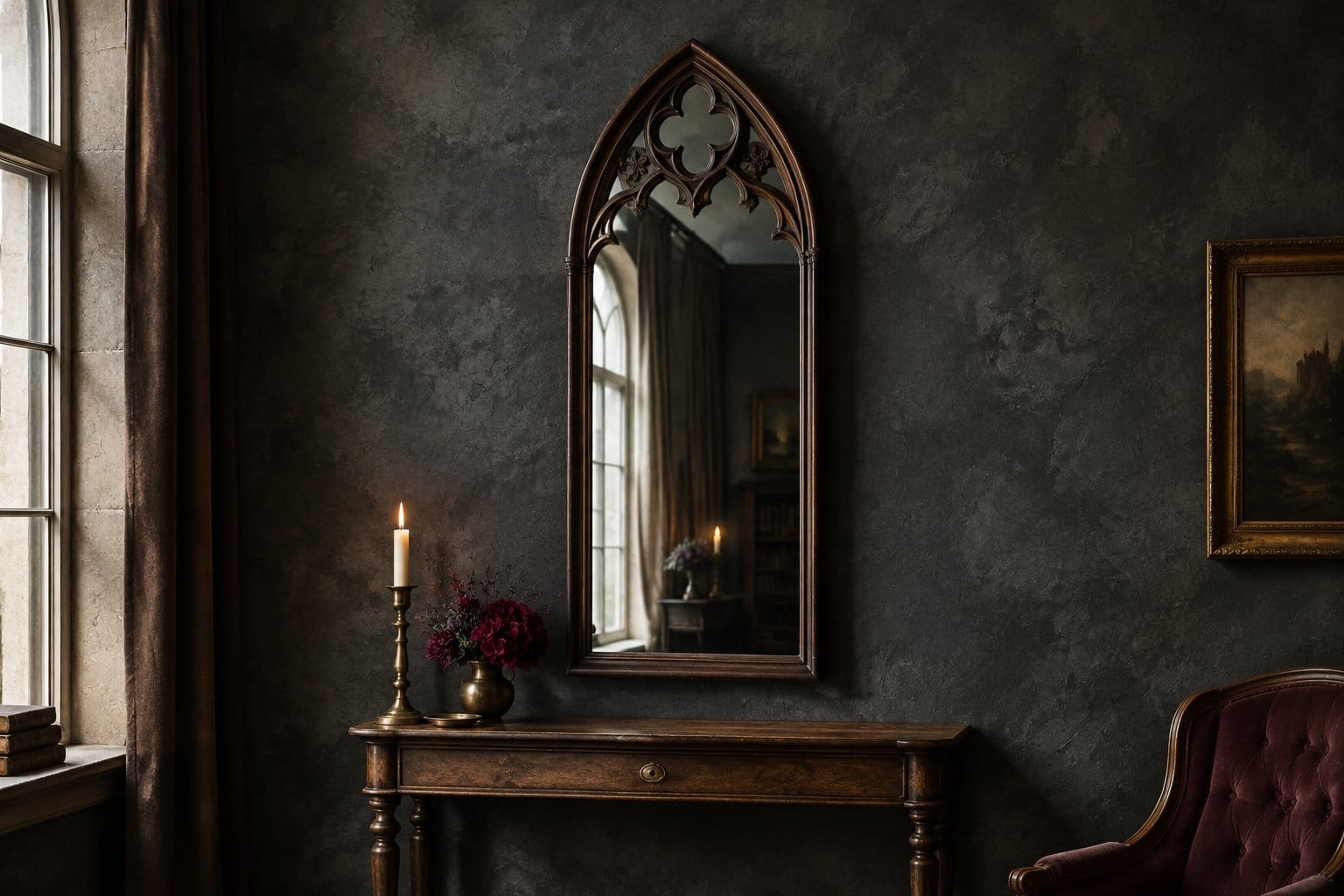
A pointed-arch mirror borrows the shape of cathedral windows, so it adds architecture to a flat wall with two screws. It also bounces light, which dark rooms need.
Start here: Hang it over a console table in your entry or above a dresser. The bottom edge should sit about 6 to 10 inches above the furniture.
Cost: Low to mid. Thin metal frames cost less; carved wood frames cost more.
Visual weight: Light to medium. The glass keeps it airy.
Place it across from a window or lamp to double the glow. For a more ornate take, a 25-inch vintage wall mirror with built-in candle holders and a gold baroque frame leans more Victorian than cathedral. Tall mirrors are heavy, so use a stud or rated wall anchors and skip the tiny nail that came in the box.
5) Dark-Stained Carved Wood Furniture
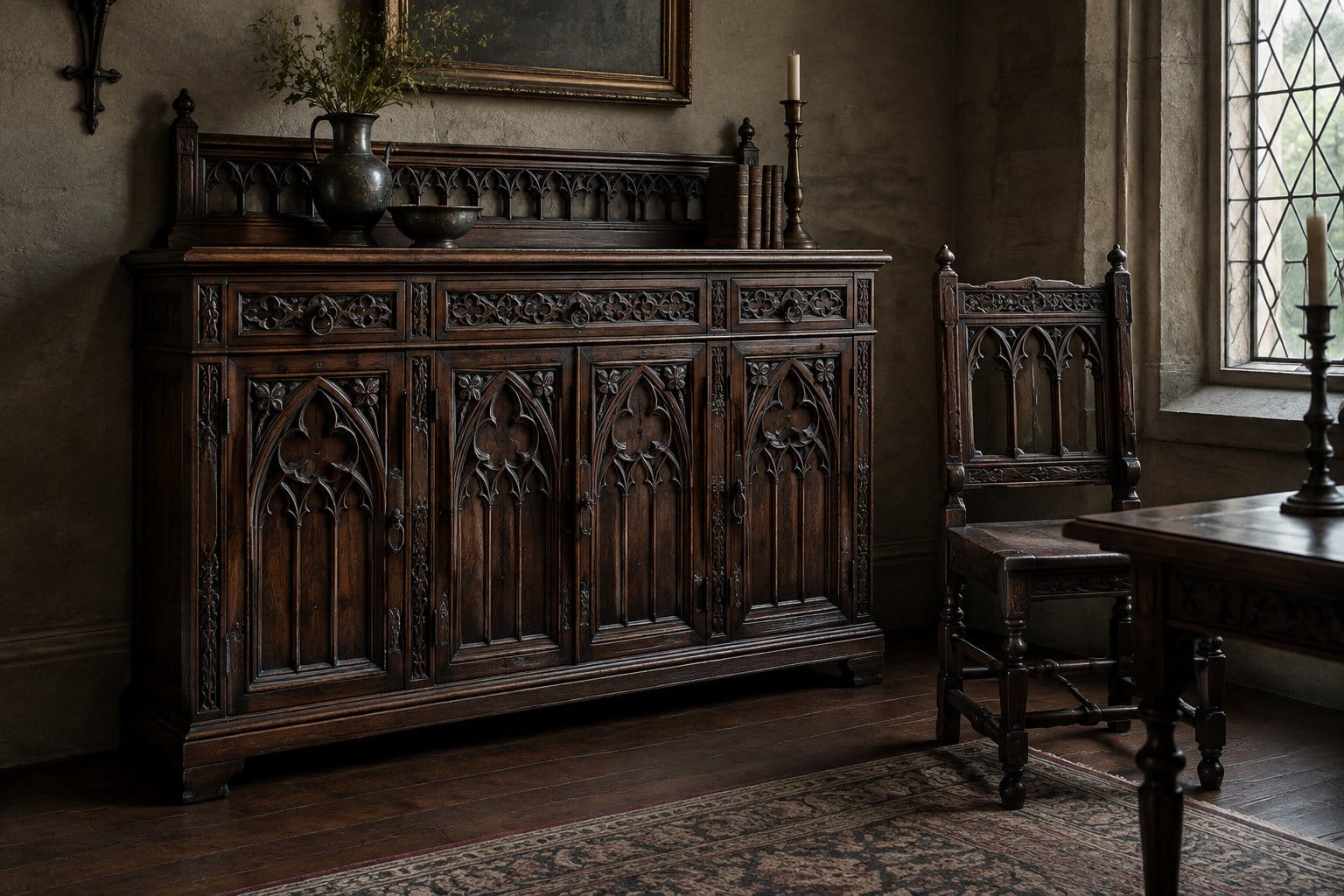
Carved dark wood adds the old-world texture that makes gothic rooms feel collected over time. Look for spiral legs, linenfold panels, or trefoil cutouts.
Start here: Hunt thrift stores and estate sales. Heavy carved sideboards from past decades show up often and cost far less than new.
Cost: Low if secondhand, high if new and solid.
Visual weight: Heavy. One or two carved pieces per room is the sweet spot.
If you find a solid piece with a scratched finish, a gel stain in ebony or dark walnut covers light wear without full stripping. Clean it first with mineral spirits so the stain grabs. Keep carving dust-free with a soft paintbrush; a rag just pushes dirt deeper into the grooves. Set a pair of brass candlesticks or a stack of old books on top and you’re done.
6) Jewel-Tone Velvet Curtains
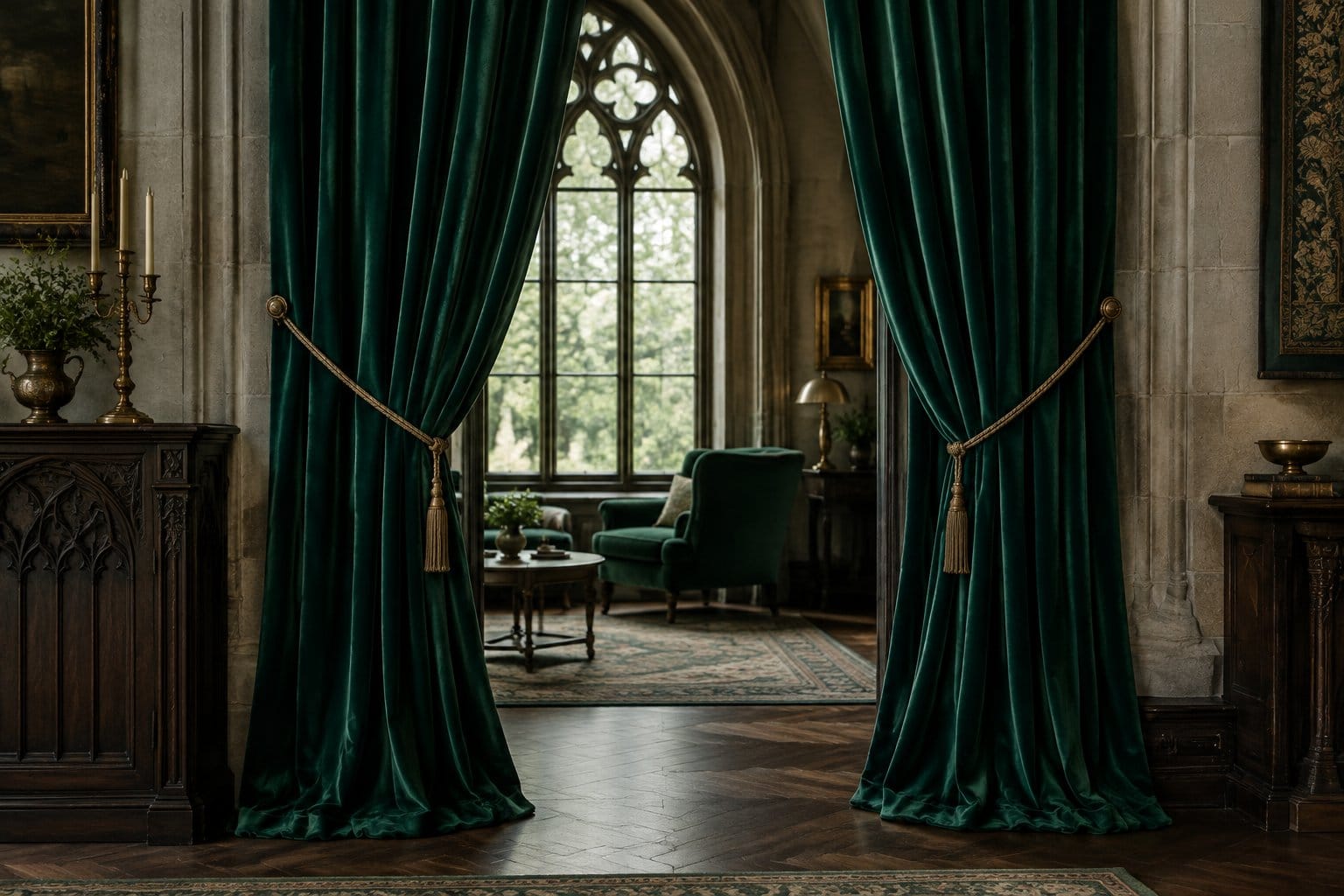
Floor-length velvet curtains in emerald, sapphire, or deep red give you drama and softness in one move. They also soak up sound, so the room feels hushed.
Start here: Hang the rod 4 to 6 inches above the window frame and let panels just kiss the floor. That trick makes ceilings look higher.
Cost: Low to mid.
Visual weight: Medium. Heavy fabric frames a window without blocking the wall.
If you want color plus function, burgundy blackout curtains with a black liner block light and drafts in bedrooms. For a cooler, moonlit feel, silver velvet curtains pair well with charcoal walls. Steam them after hanging to drop the packaging creases. Double panel width to window width for proper fullness.
7) Stained-Glass Window Film
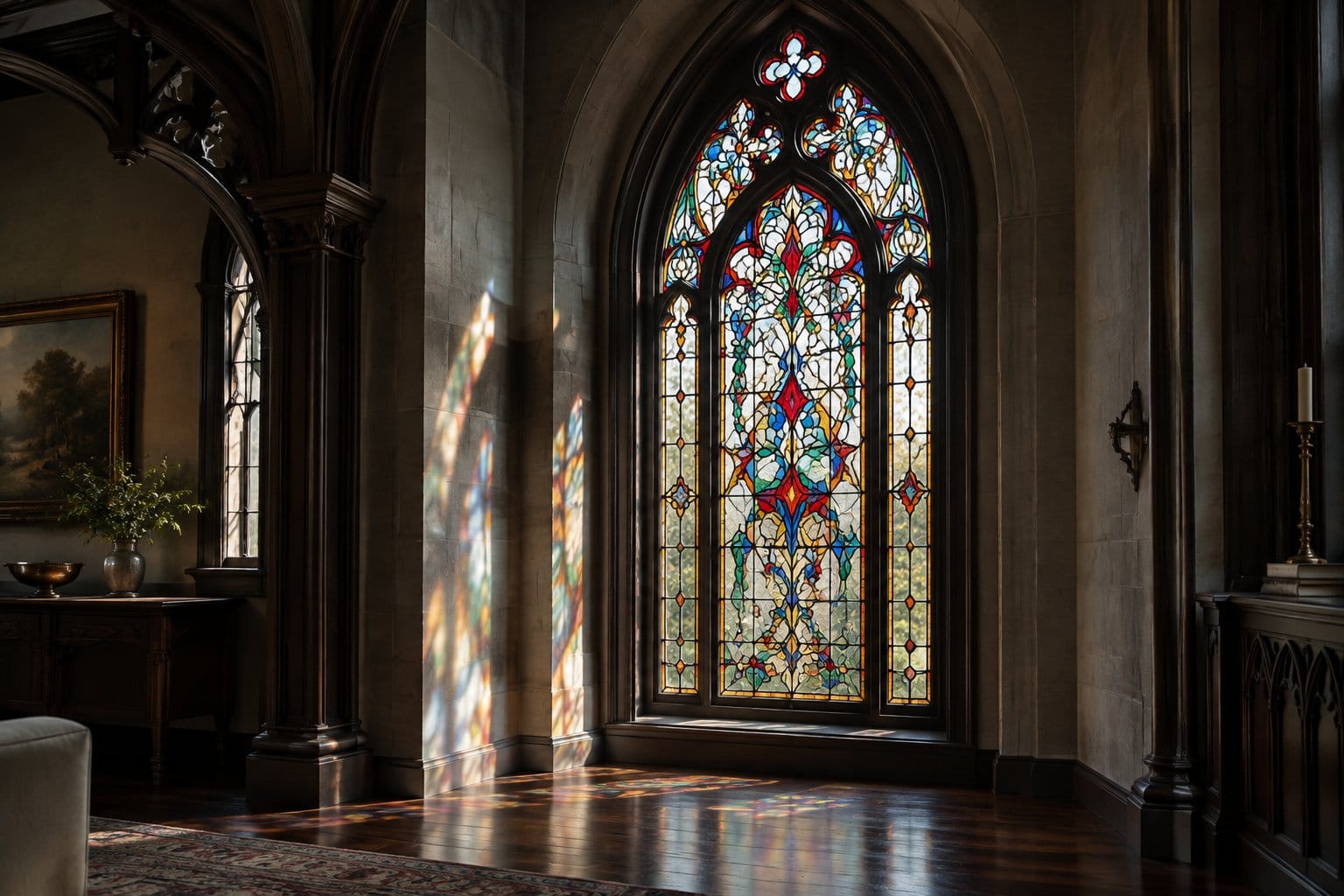
Stained-glass window film gives you colored light and chapel vibes for the price of a pizza, and it peels off when you move. It’s one of the best rental moves on this list.
Start here: Try it on a bathroom window, a door sidelight, or a transom where you also want privacy.
Cost: Low.
Visual weight: Light, but the colored light patterns add a lot of mood.
How to apply it cleanly:
- Clean the glass with soapy water and a razor scraper.
- Spray the glass with water plus a drop of dish soap.
- Lay the film, then squeegee from the center out.
- Trim edges with a sharp utility blade.
Pick designs with deep reds, cobalt, and amber. Pastel patterns look more beach cottage than cathedral. South and west windows throw the best color in the afternoon.
8) Damask Wallpaper Feature Wall
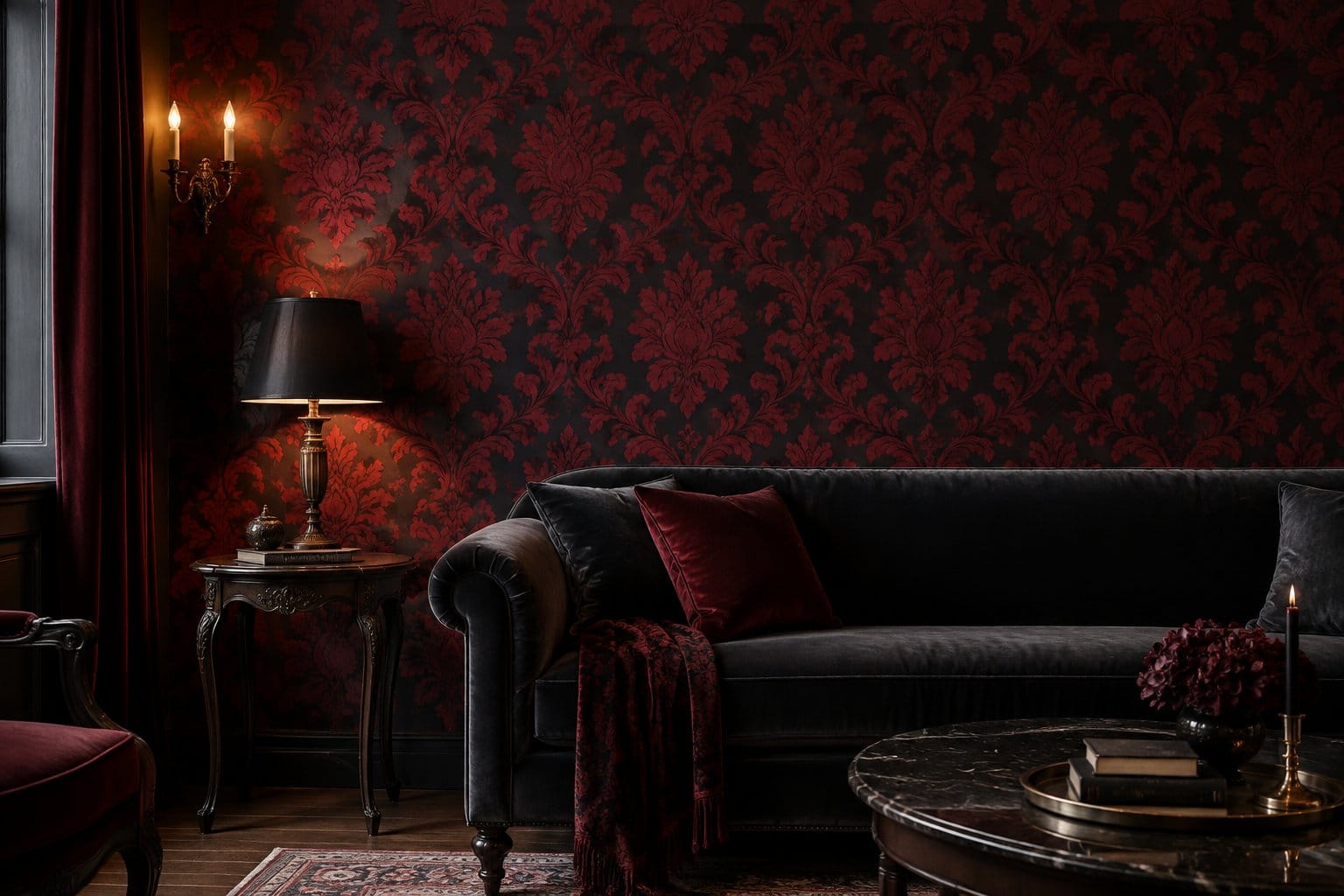
Damask is the classic gothic pattern, with ornate repeating medallions that look like old silk wall coverings. A single wall of it goes a long way.
Start here: Try peel-and-stick first. A black damask peel-and-stick wallpaper also works on drawer fronts and old furniture.
Cost: Low for peel-and-stick, mid for traditional paste paper.
Visual weight: Heavy. Pattern plus dark color is a lot.
Tone-on-tone damask (black on charcoal, or burgundy on deep red) is the subtle route. High-contrast black on gold is louder. Match the pattern at each seam before you press down, and buy one extra roll for mistakes. Peel-and-stick struggles on textured walls, so smooth ones give the best result.
9) Gothic-Arch Bookcases
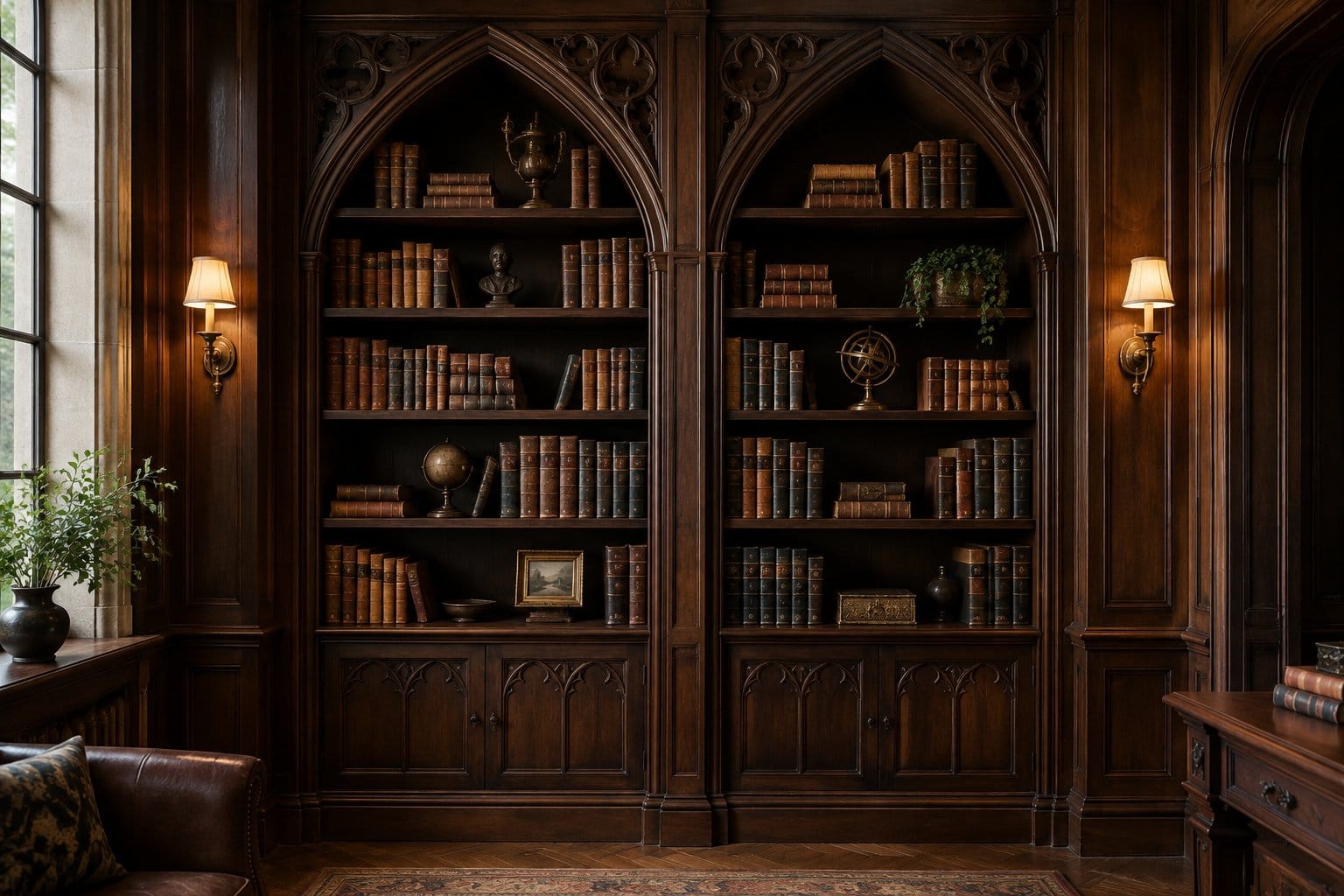
Bookcases with pointed arches at the top turn storage into architecture. A pair flanking a window or fireplace looks custom even when it isn’t.
Start here: Buy standard tall bookcases and add an arched face frame cut from plywood. Paint everything one dark color so it looks built-in.
Cost: Mid for DIY, high for true custom millwork.
Visual weight: Heavy. Two tall cases fill a wall.
Anchor tall bookcases to wall studs with anti-tip kits, especially with kids or pets around. Style shelves with books in mixed orientations, a few candlesticks, a small skull or bust, and some empty space. Packing every inch makes dark cases look cluttered. Tape an LED strip under the top shelf for a soft glow at night.
10) Antique Gold Gallery Frames
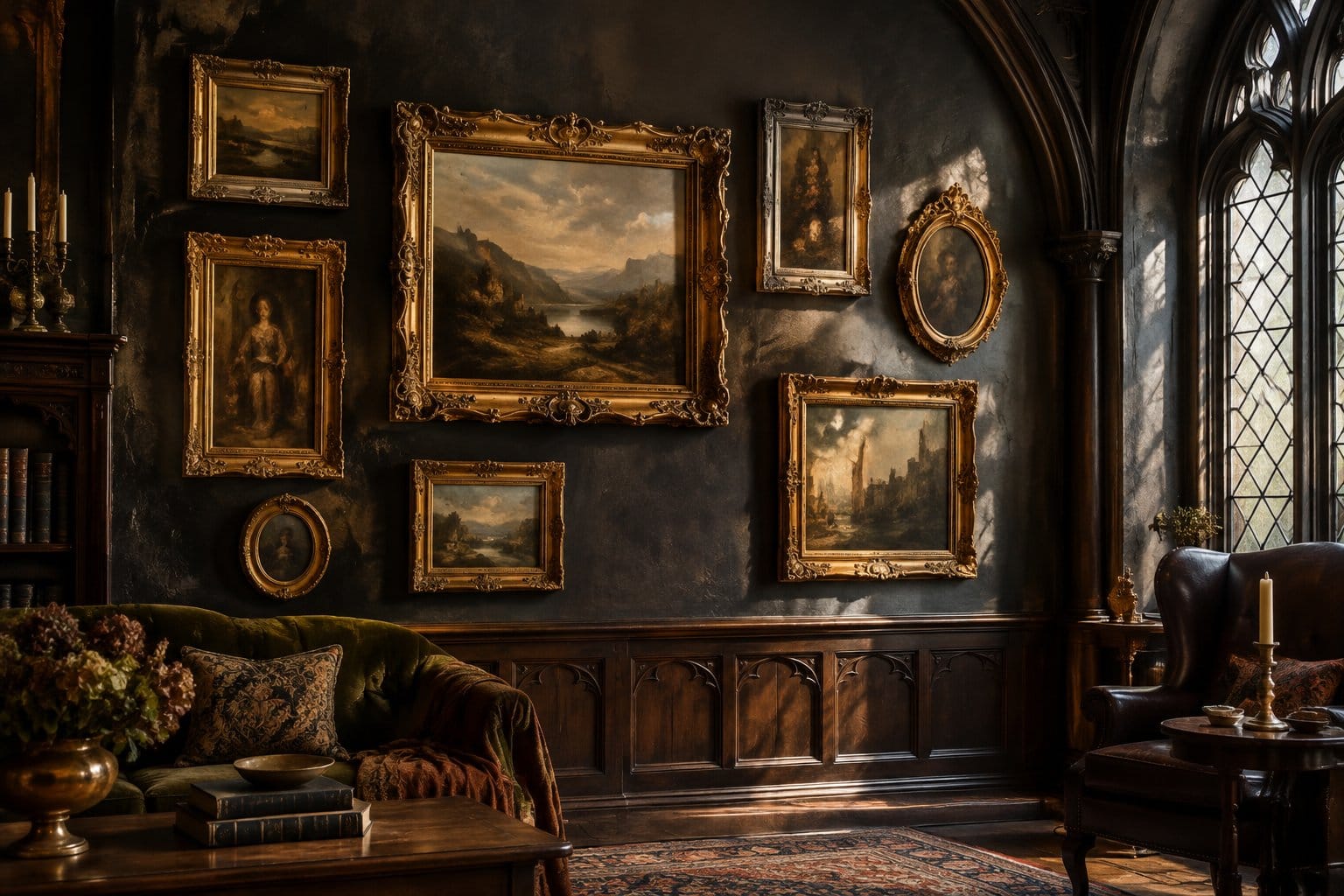
Ornate gold frames glow against dark walls, and a full gallery wall feels like a private museum. The frames matter more to the look than what’s inside them.
Start here: Collect mismatched gilt frames from thrift stores. Fill them with vintage portraits, old maps, or dark oil prints.
Cost: Low if thrifted.
Visual weight: Medium to heavy, depending on how tight you hang them.
Lay the whole arrangement on the floor first, then trace each frame on kraft paper and tape the paper to the wall. Keep 2 to 3 inches between frames. If a frame is too shiny, rub on a little dark wax to age it. Mixing in one or two black frames keeps it from looking too matchy.
11) Amber-Glass Table Lamps with Warm Bulbs
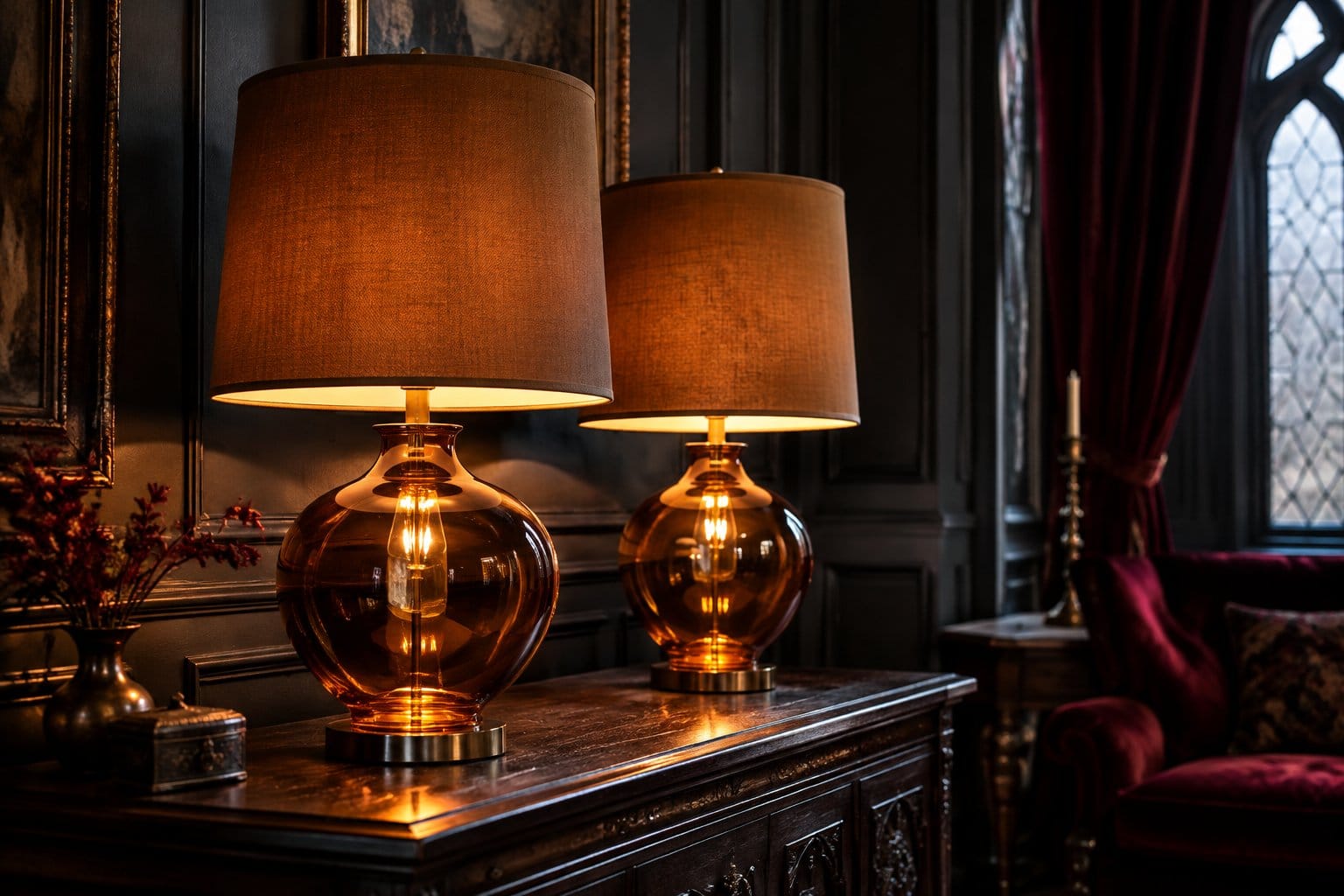
Amber-glass lamps cast a honey-colored glow that makes dark walls look rich. They fix the biggest problem in gothic rooms: dark surfaces soak up light.
Start here: Place two lamps at different heights, one on a side table and one on a console or bookshelf.
Cost: Low to mid.
Visual weight: Light, with a big payoff in mood.
Use bulbs at 2700K or lower. Cool white bulbs make burgundy look muddy and black look blue. The Department of Energy’s residential lighting guideline shows how dark-colored rooms take more ambient light than pale ones, so layer lamps with overhead light. Aim for three or four light sources per room, all at eye level or below. Smart plugs let you switch them all on at once.
12) Oxidized Brass Candelabras
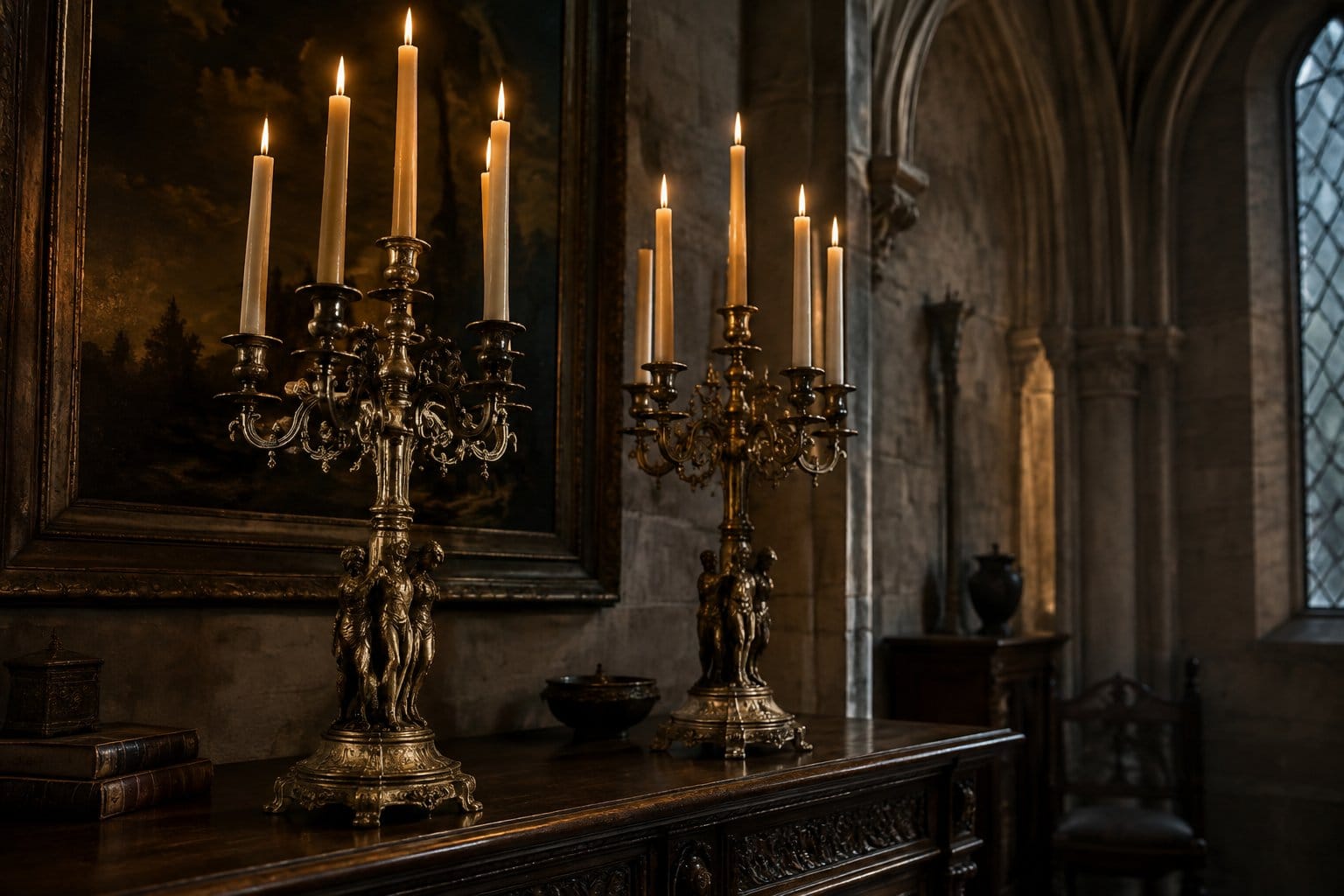
A pair of aged brass candelabras on a mantel or dining table is instant gothic. The darkened finish looks centuries old.
Start here: Buy shiny brass secondhand and let it tarnish naturally, or speed it up with a store-bought brass darkening solution.
Cost: Low.
Visual weight: Light to medium.
Real flames bring real risk. The National Fire Protection Association reports that over half of home candle fires started when something flammable, like curtains or bedding, sat too close. Keep candles at least 12 inches from anything that burns, and never leave them lit when you leave the room. Flameless taper candles look convincing now and are the smarter pick near velvet drapes. For black iron instead of brass, a gothic candle stand set works as a table centerpiece.
13) Aubusson-Style Floral Rug
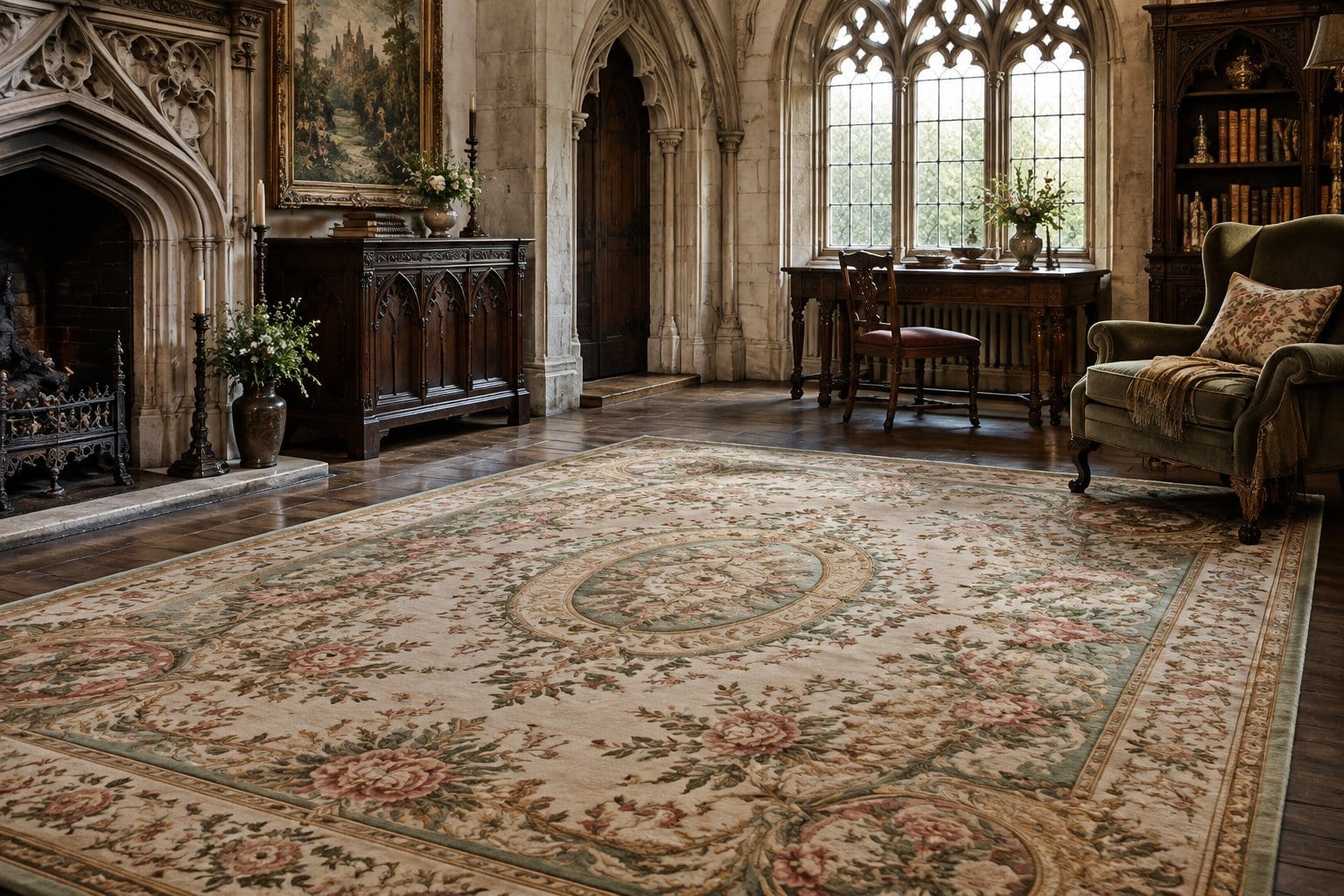
An Aubusson-style rug, with its faded roses and scrolling borders, softens a dark room and adds old-manor charm. The muted pinks and golds keep black furniture from feeling harsh.
Start here: Size it so at least the front legs of your sofa and chairs sit on it. In most living rooms that means 8 by 10 feet.
Cost: Low for machine-made, high for hand-woven.
Visual weight: Medium.
Look for versions on a dark background, like black, navy, or deep green. Cream-background Aubussons read more French country. Low-pile, flat-woven styles work best under coffee tables and in dining rooms. Add a rug pad; it keeps the rug from sliding and makes a thin rug feel plush.
14) Medieval Tapestry Wall Hanging
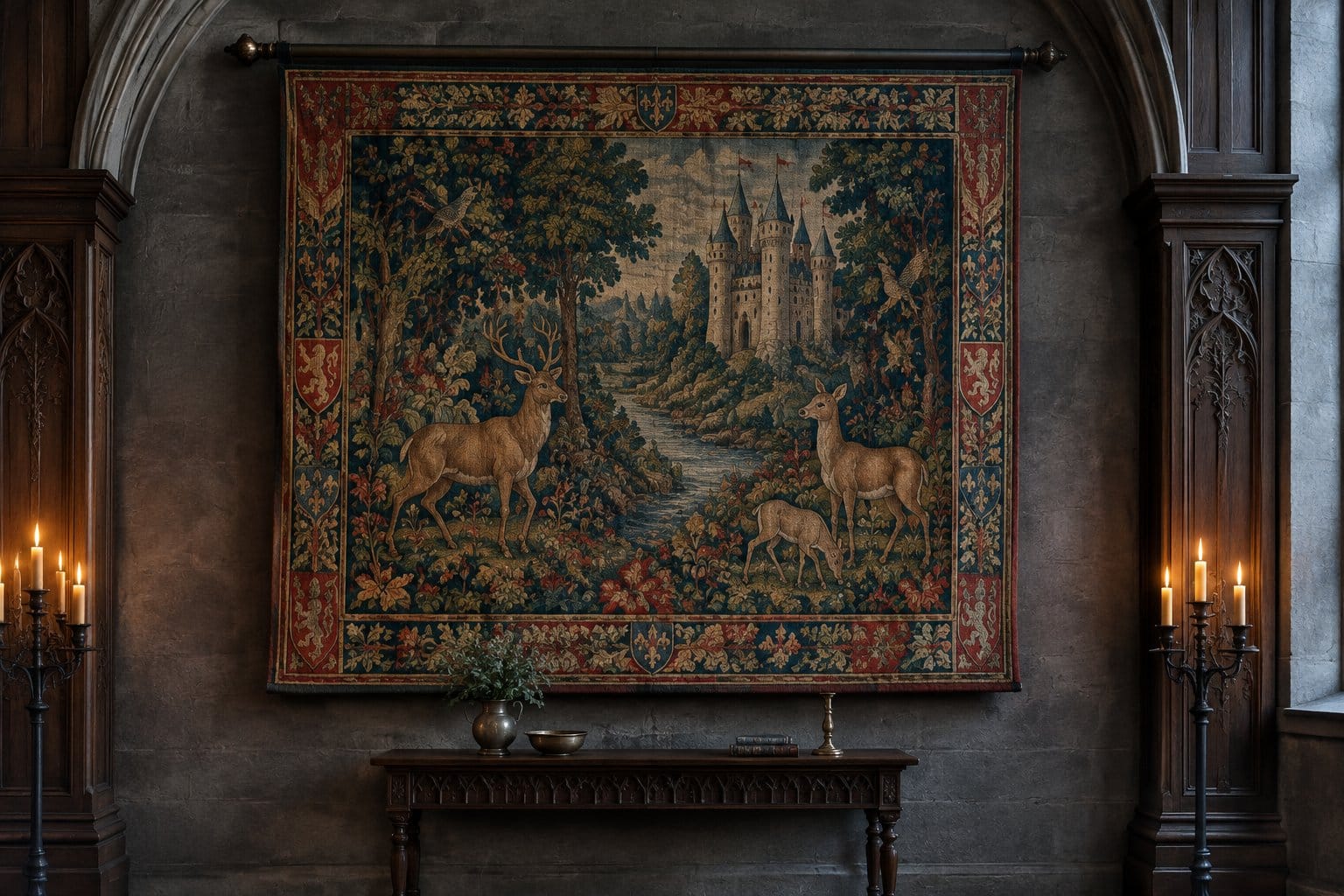
A woven tapestry with hunting scenes, unicorns, or dense florals covers a big wall for less than large framed art. It also dampens echo in rooms with hard floors.
Start here: Hang it from a wooden or iron rod with finials. Sew a simple sleeve on the back if it doesn’t have one.
Cost: Low to mid.
Visual weight: Heavy in color, light in physical weight.
Choose woven jacquard tapestries over printed polyester ones. The texture is what sells the look. Reproductions of famous medieval works, like the Unicorn Tapestries, come in many sizes. Hang it above a console or bed, with the bottom edge about 8 inches above the furniture. Vacuum it gently with a brush attachment every few months.
15) Tufted Leather Wingback Chair
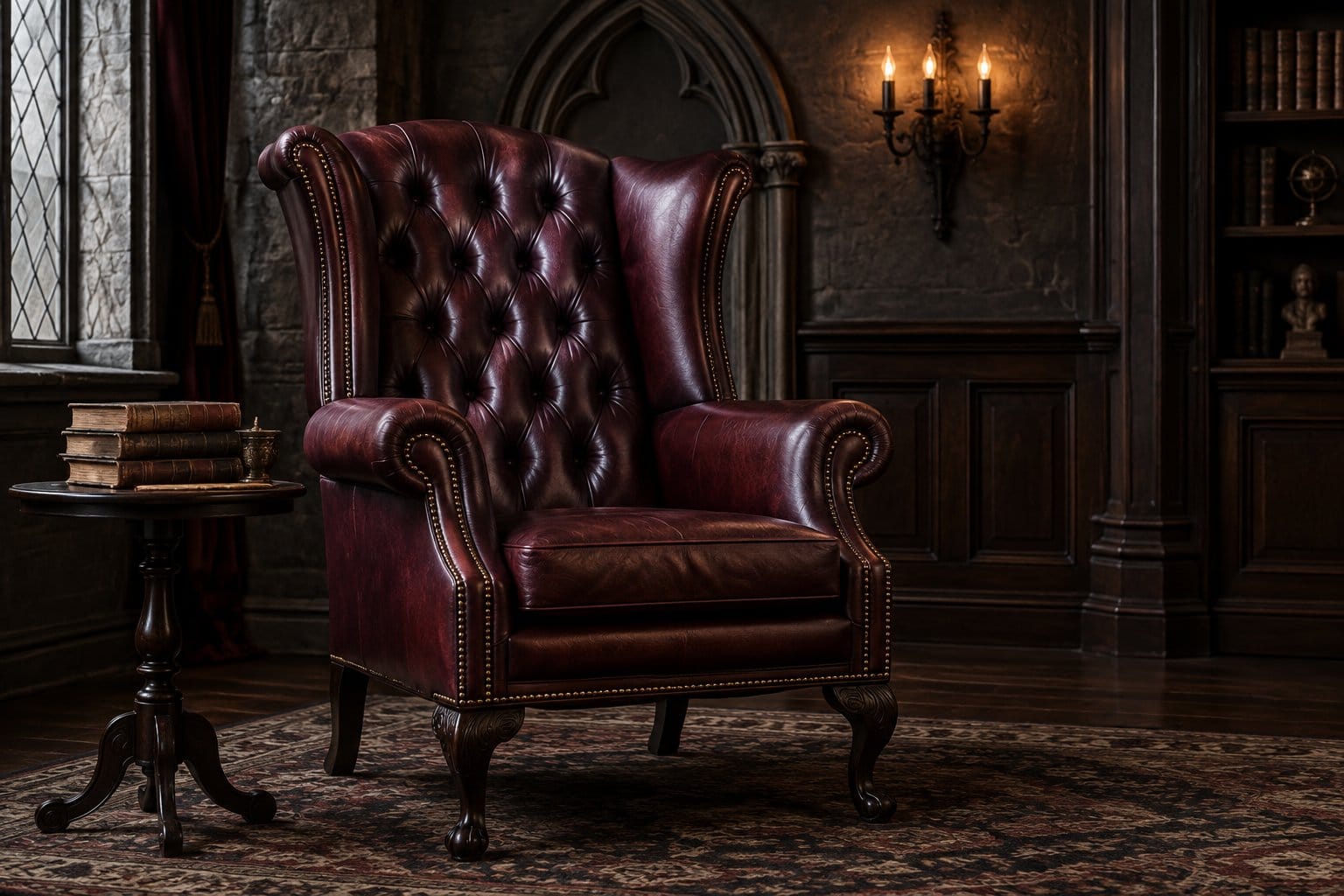
A tufted leather wingback turns any corner into a reading nook straight out of an old library. The tall wings frame your head and block drafts, which is why they were built that way.
Start here: Pair it with a small side table and a lamp. That trio makes a complete vignette.
Cost: Mid to high. Real leather costs more but ages beautifully.
Visual weight: Medium to heavy.
Oxblood, deep brown, and black all work. Oxblood adds warmth next to a black sofa. Faux leather is fine, but check reviews for peeling. A worn secondhand leather chair has more character than a stiff new one. Condition real leather twice a year so it stays soft.
16) Black Kitchen Cabinets with Brass Hardware
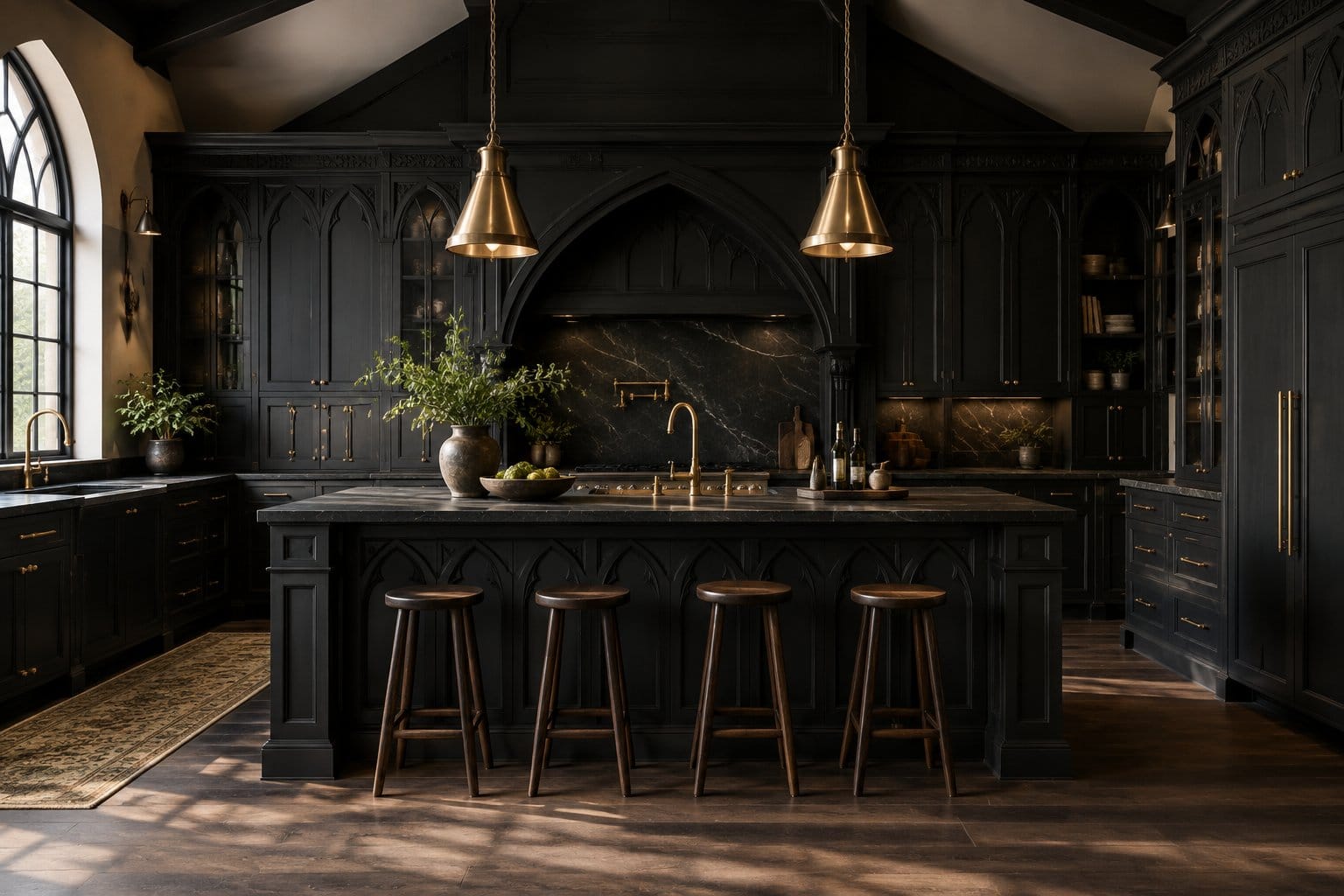
Black cabinets with brass pulls bring gothic drama into the kitchen while still looking modern and clean. It’s the most practical way to go dark in a room you use every day.
Start here: Paint your existing cabinets. Remove doors, degrease, sand lightly, prime with bonding primer, then use a cabinet-grade enamel.
Cost: Mid for DIY paint, high for new cabinets.
Visual weight: Very heavy.
Keep counters light (white marble or quartz) so the room doesn’t close in. Add under-cabinet lighting; dark cabinets hide your cutting board otherwise. Matte black shows fingerprints, so a satin finish is easier to live with. Swapping hardware to aged brass is a weekend job on its own if paint feels like too much.
17) Dark Marble Fireplace Surround
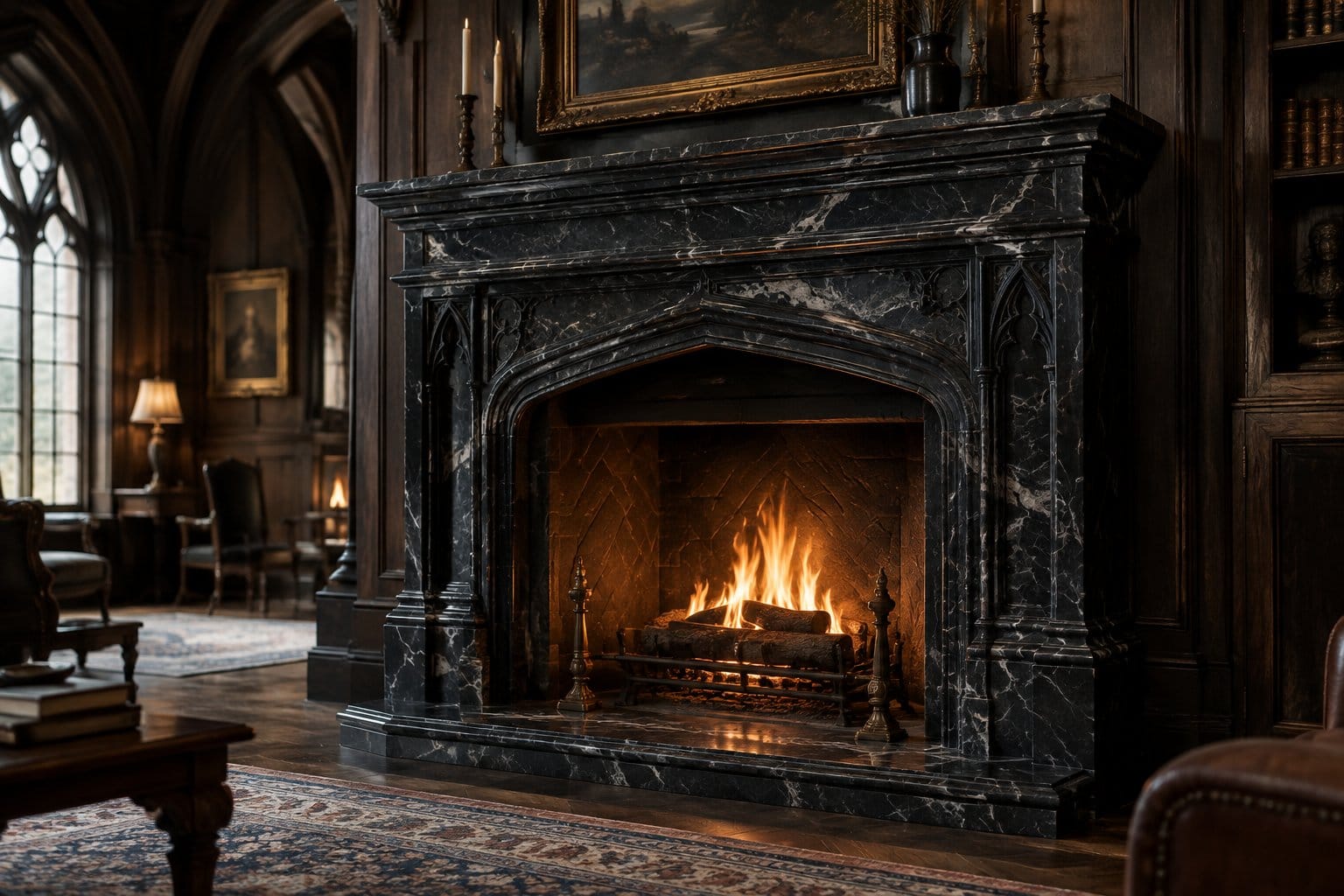
A black or deep green marble surround makes the fireplace the dark heart of the room. Veining adds movement so it doesn’t read as a flat black hole.
Start here: Look at marble-look porcelain tile. It’s cheaper and tougher than stone.
Cost: High for real marble with installation, mid for porcelain.
Visual weight: Heavy.
Surrounds sit close to heat, so any change around a working fireplace needs non-combustible materials and a pro. If your fireplace doesn’t work, a surround still makes a perfect frame for a cluster of pillar candles in the firebox. Style the mantel with candelabras and a large arched mirror to tie ideas together.
18) Ornate Plaster Ceiling Medallion
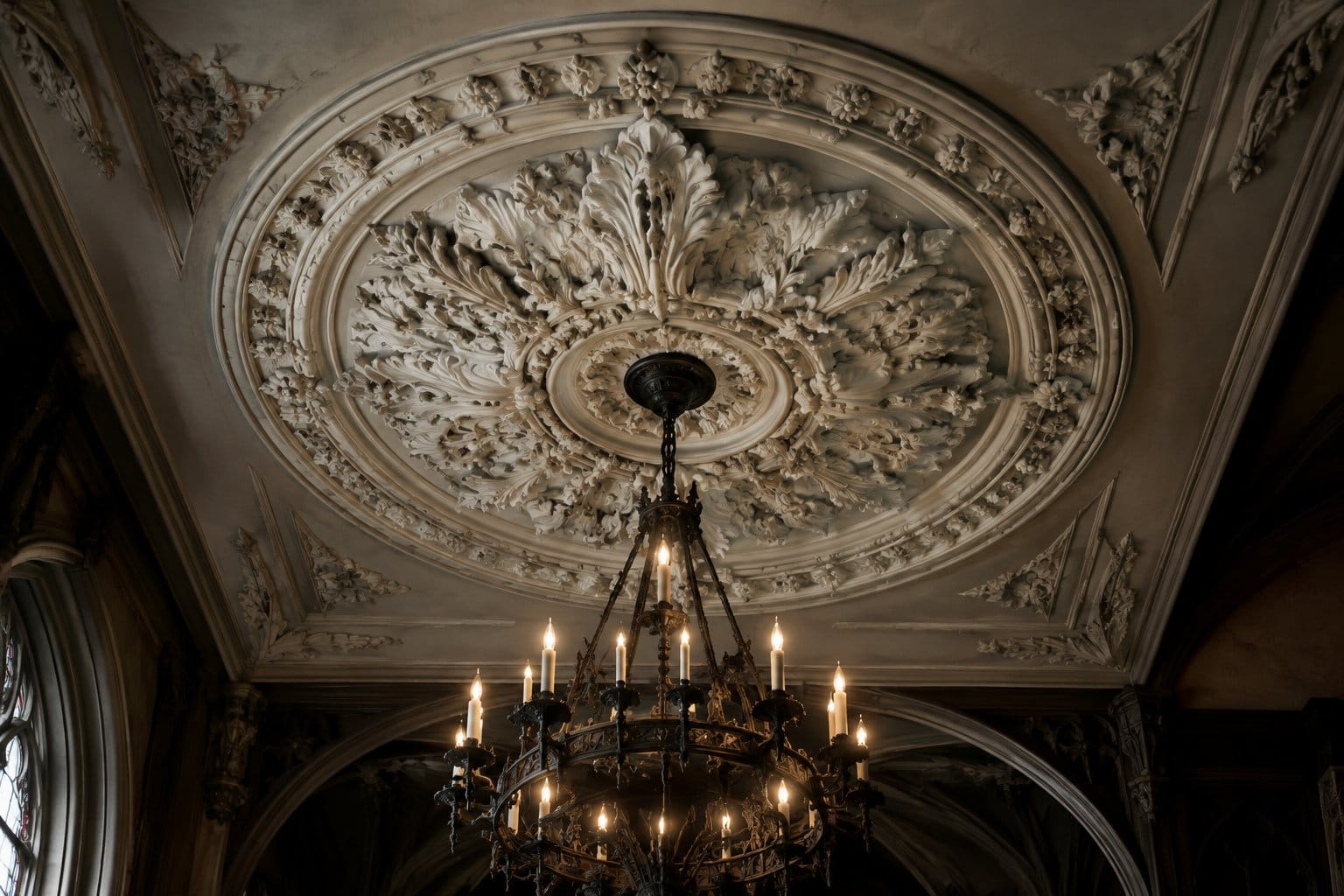
A ceiling medallion around your light fixture adds Victorian detail to the most ignored surface in the house. It’s one of the cheapest ways to make a room look historic.
Start here: Buy a polyurethane medallion. It looks like plaster but weighs a fraction as much.
Cost: Low.
Visual weight: Light, with high impact.
Size it by room: roughly 1 inch of diameter per foot of room width is a good rule. Turn off the breaker, drop the fixture, slide the medallion over the box, and glue it with construction adhesive. Paint it the ceiling color for subtlety, or pick out details in gold for drama.
19) Gothic Tracery Room Divider
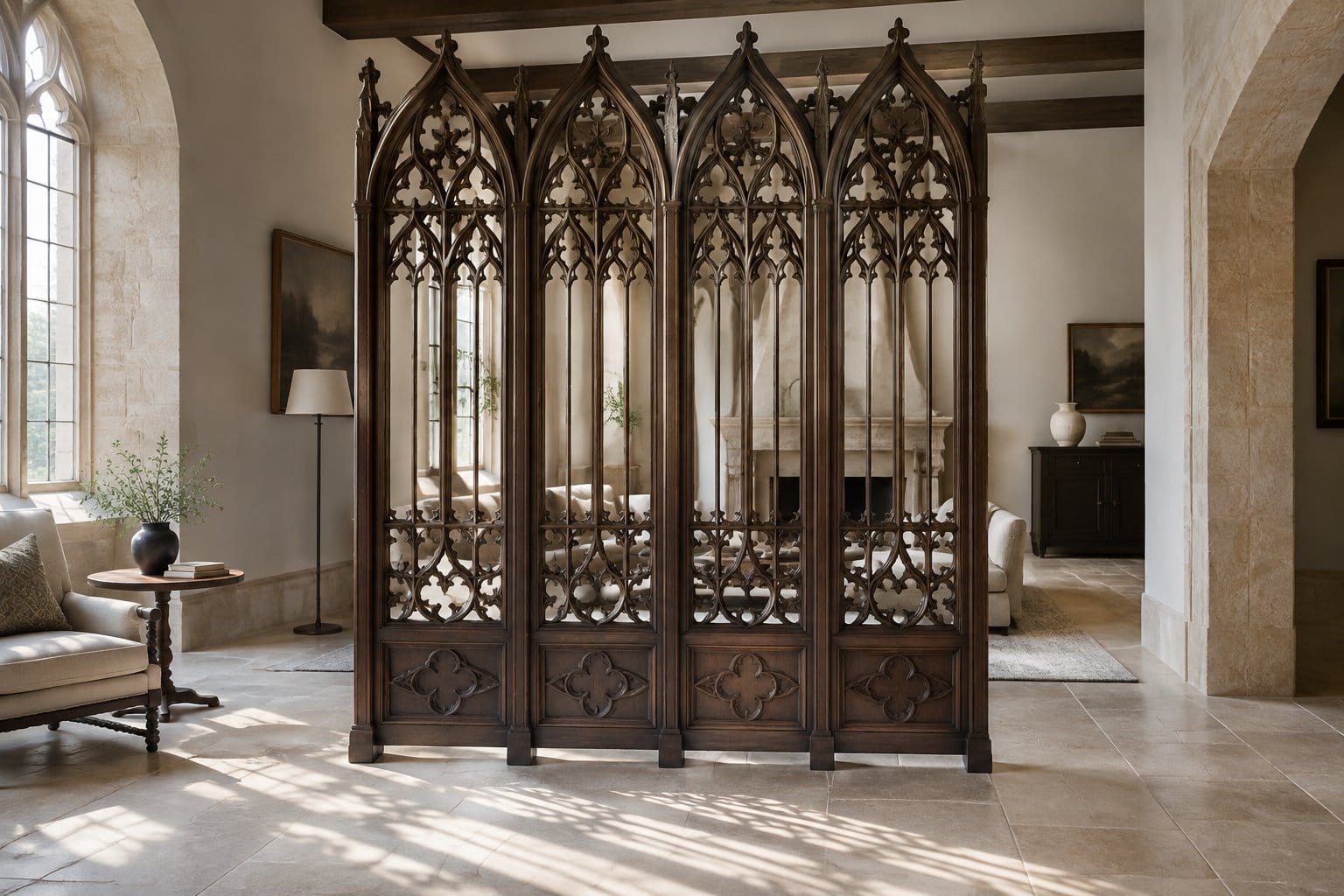
A folding screen with pointed-arch tracery splits a room while letting light through. It’s handy in studios where your bed and living area share space.
Start here: Use it to hide a desk, a laundry corner, or the foot of a bed.
Cost: Low to mid.
Visual weight: Medium. The cutouts keep it from feeling like a wall.
Dark wood or black metal work best. Put a lamp behind it at night and the tracery casts shadow patterns on the wall. Three panels is the most flexible size. Check the base; tall screens tip easily, so a weighted foot helps.
20) Canopy Bed with Dark Drapery
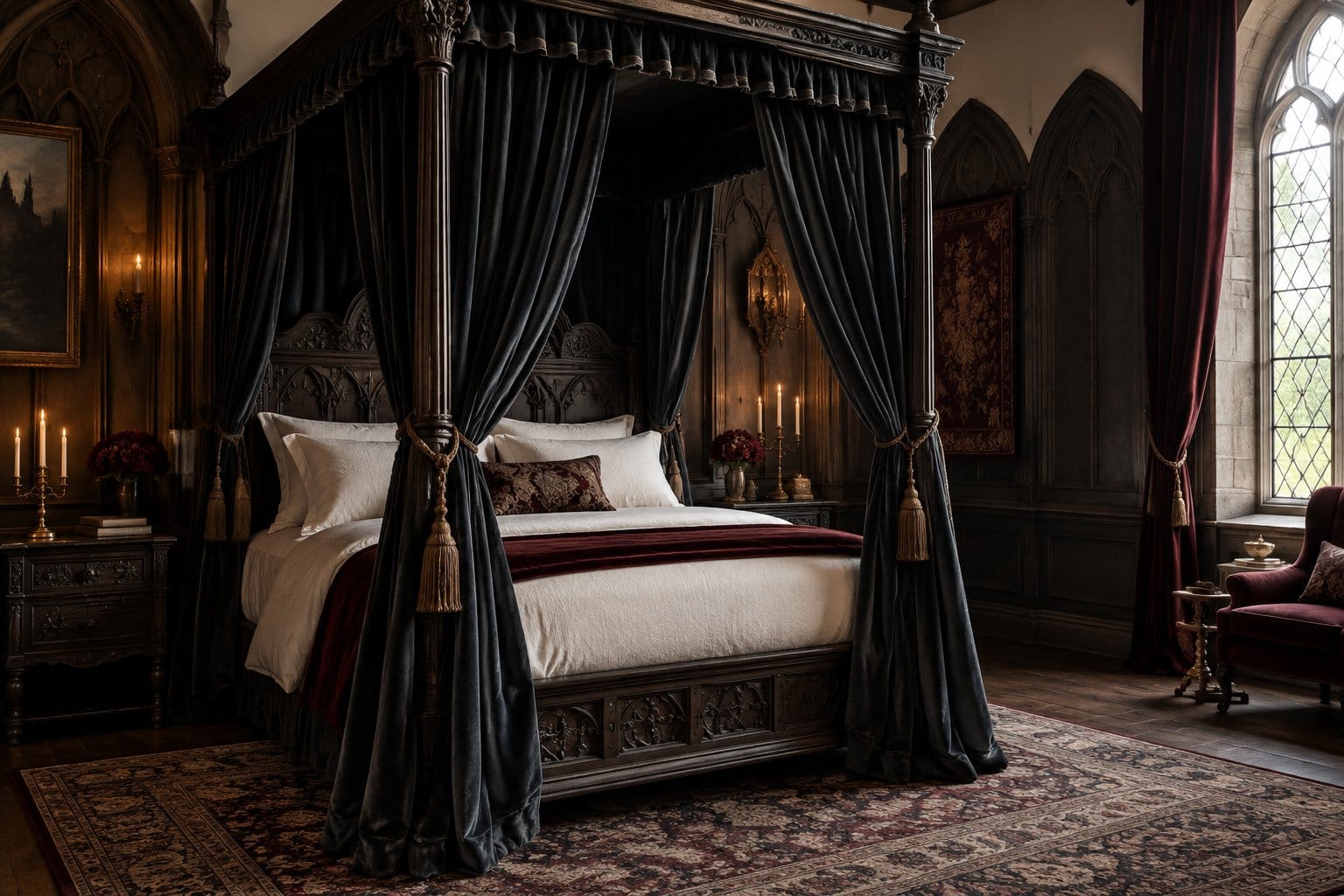
A four-poster bed with heavy drapes turns your bedroom into a romantic, cocoon-like retreat. It’s the bedroom equivalent of the Chesterfield: one piece sets the tone.
Start here: If a new bed is too pricey, mount ceiling tracks around your current bed and hang velvet or linen panels.
Cost: High for a full four-poster, low for the ceiling-track version.
Visual weight: Very heavy.
Tie drapes back at the posts during the day so the room breathes. Crisp light bedding inside dark curtains keeps it from feeling gloomy. Keep candles far away here; the NFPA figures above note candles as a leading heat source in bedroom fires. Use a warm LED lamp on the nightstand.
21) Oversized Victorian Botanical Prints
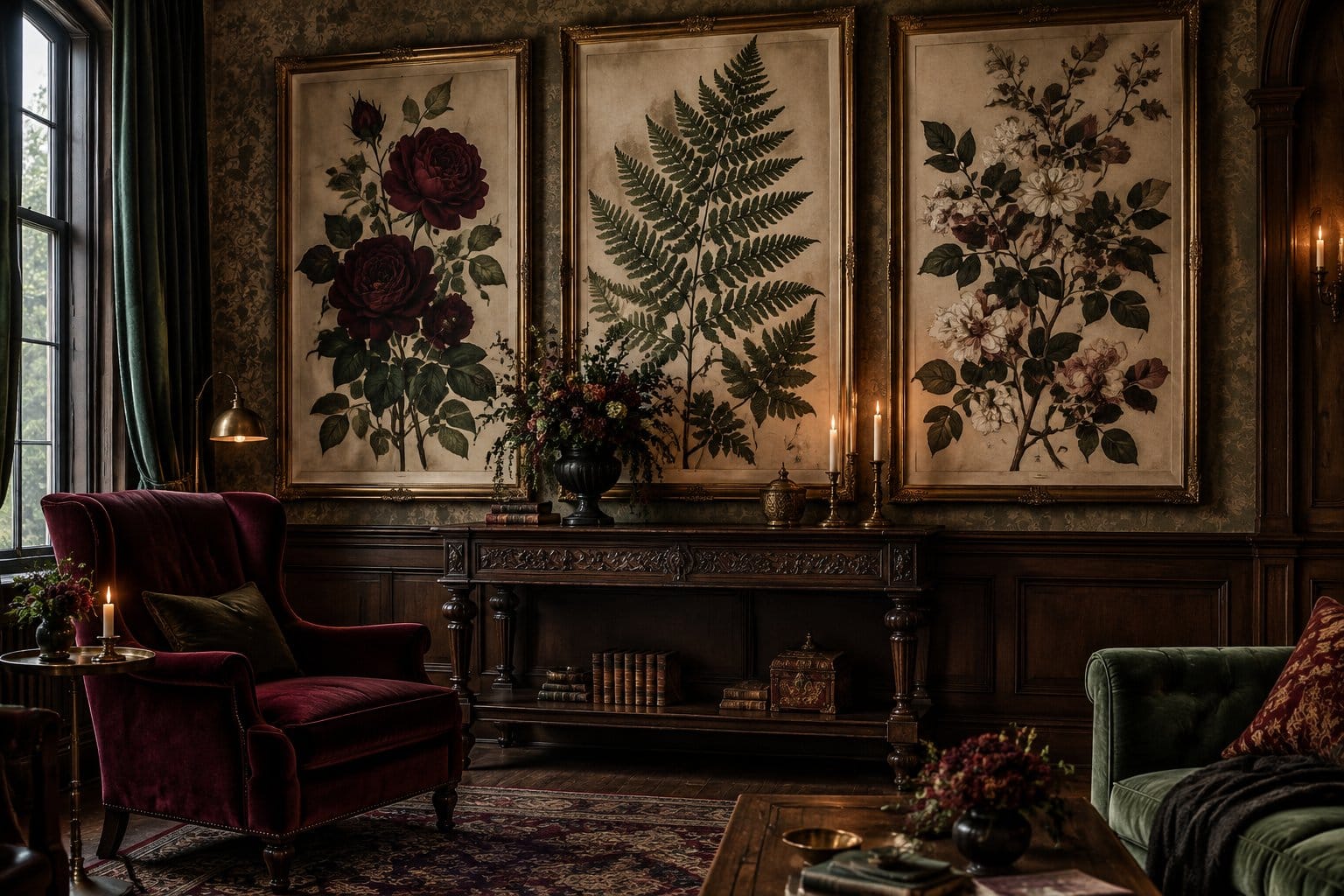
Big botanical prints, like poisonous plants, dark roses, or moths, bring a naturalist’s-study feel. They balance heavy furniture with something organic.
Start here: Download public-domain scientific illustrations from museum archives and print them large at a print shop.
Cost: Low.
Visual weight: Medium.
Print on dark backgrounds, or ask for a black border. Two or three prints at 24 by 36 inches look better than many small ones. Frame them in black or aged gold. They work in every room, including kitchens and bathrooms, if you use sealed frames.
22) Black-Exterior Clawfoot Bathtub
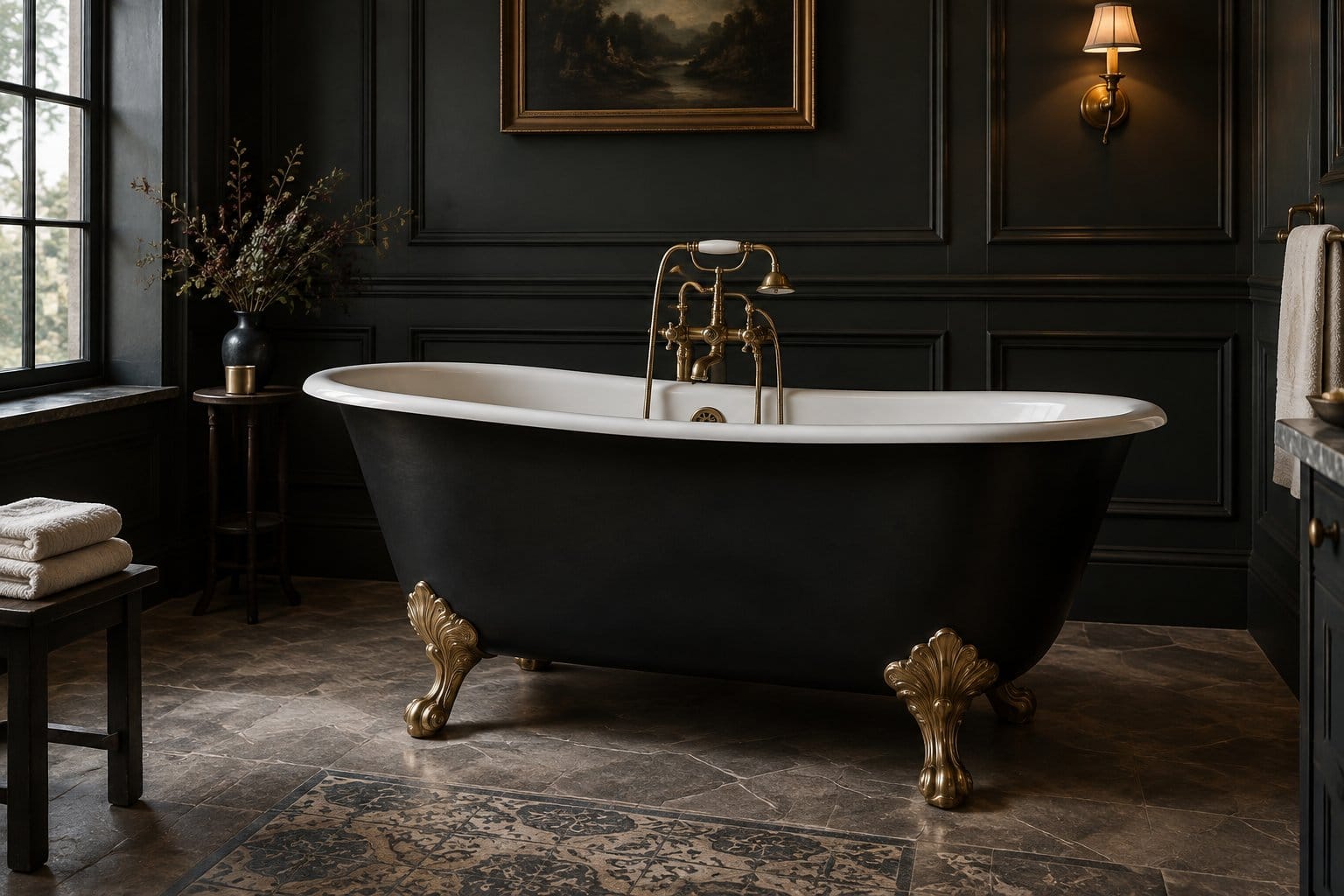
A clawfoot tub painted black on the outside is the gothic bathroom’s showpiece. It’s dramatic and still feels classic.
Start here: If you already own a clawfoot, paint the exterior with a bath-safe enamel and redo the feet in brass or black.
Cost: High for a new tub and plumbing, low to repaint an existing one.
Visual weight: Heavy.
A cast-iron tub filled with water weighs a lot, so have someone check your floor framing before installing one upstairs. Freestanding tubs need floor-mounted or wall faucets, which means plumbing work. Pair with black-and-white tile and a gold mirror.
23) Pointed-Arch Doorway Trim
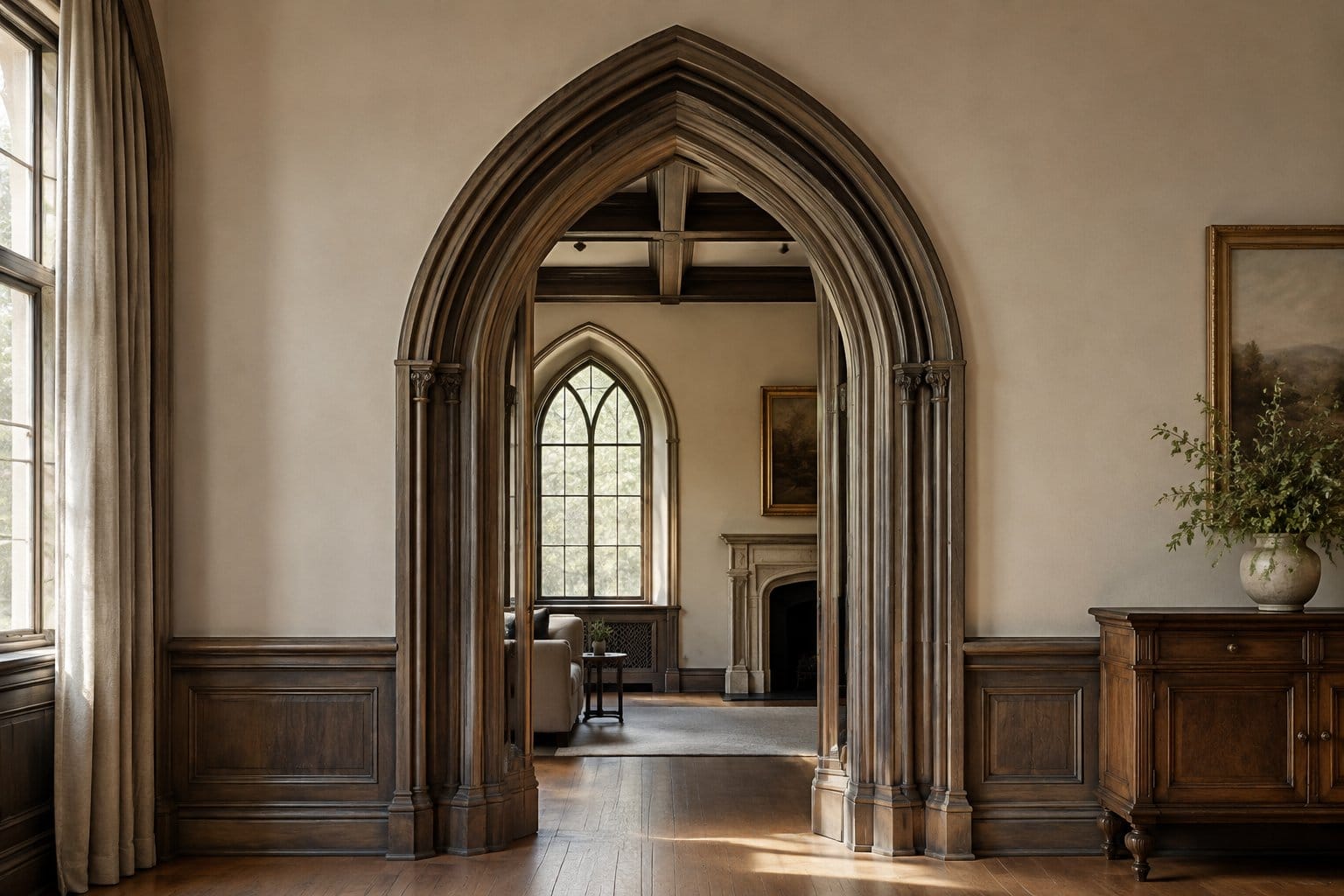
Adding a pointed arch to a plain doorway gives your home real gothic architecture. It changes how every room connects.
Start here: Try a faux version: cut an arched header from MDF, attach it above a cased opening, and paint it to match the trim.
Cost: Low to mid for faux trim, high for reframing.
Visual weight: Medium.
A true arch means cutting into drywall and changing framing, which is a job for a carpenter. The faux version needs only a jigsaw and patience. Cased openings without doors work best. Paint the trim darker than the walls to make the shape stand out.
24) Black-and-White Checkerboard Floor Tile
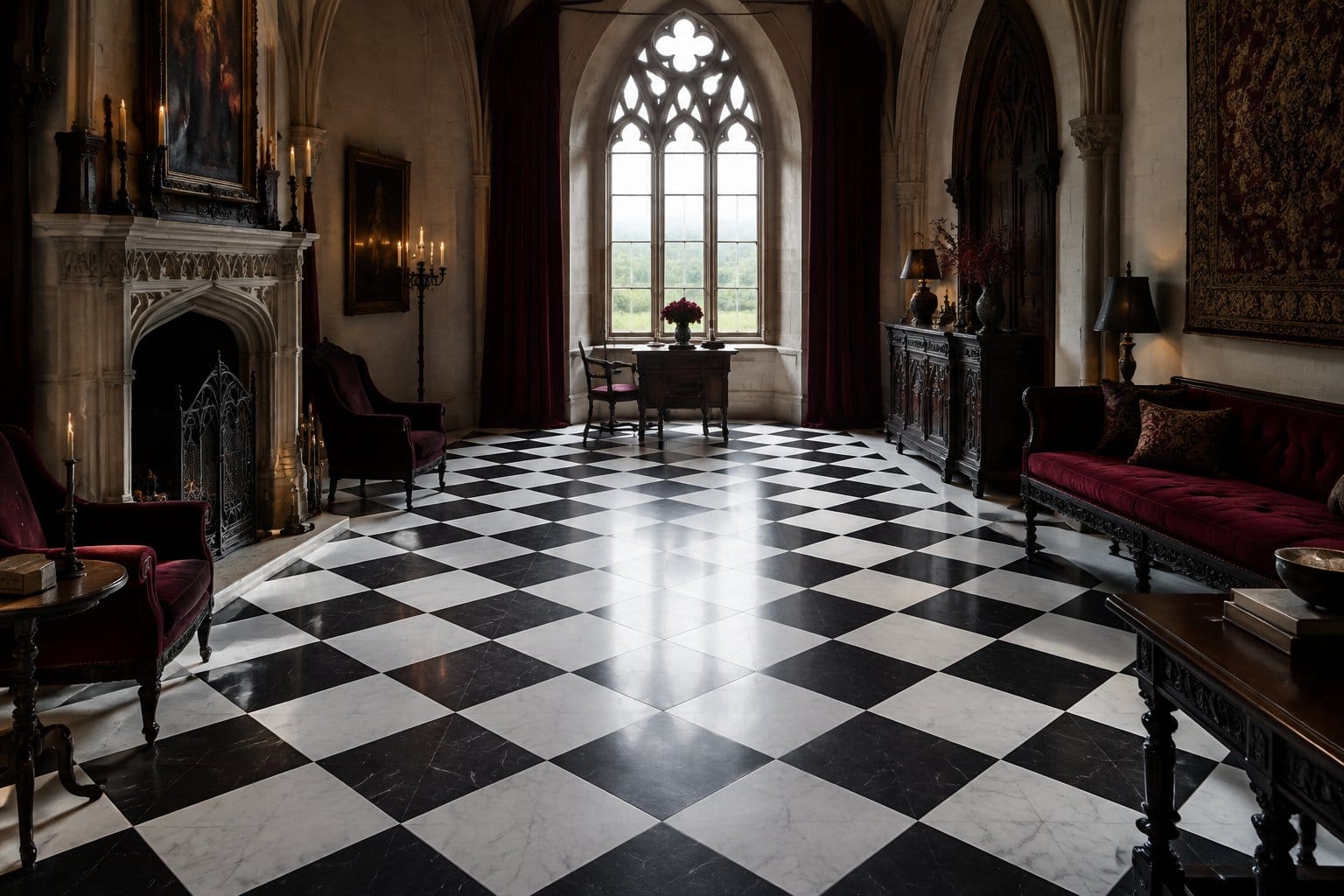
Checkerboard floors add old-world grandeur to entryways, kitchens, and bathrooms. The contrast gives a dark room some energy.
Start here: Lay the tiles on a diagonal in small rooms. It makes the floor look bigger.
Cost: Mid for tile plus labor, low for peel-and-stick vinyl.
Visual weight: Heavy.
Marble tile looks the richest, but it scratches and stains. Porcelain is tougher. Use dark gray grout; white grout turns dingy fast. Peel-and-stick vinyl squares work well over existing floors in rentals.
25) Gargoyle Bookends

Gargoyle bookends are the smallest, cheapest way to say “gothic” on a shelf. They add a wink of humor too.
Start here: Use them to hold a row of books on a desk, mantel, or console.
Cost: Low.
Visual weight: Light.
Resin versions look like stone and weigh less; cast iron holds heavy books better. If gargoyles feel too spooky, fleur-de-lis bookends give a more refined, antique look. Add felt pads underneath to protect wood.
How to Put the Look Together
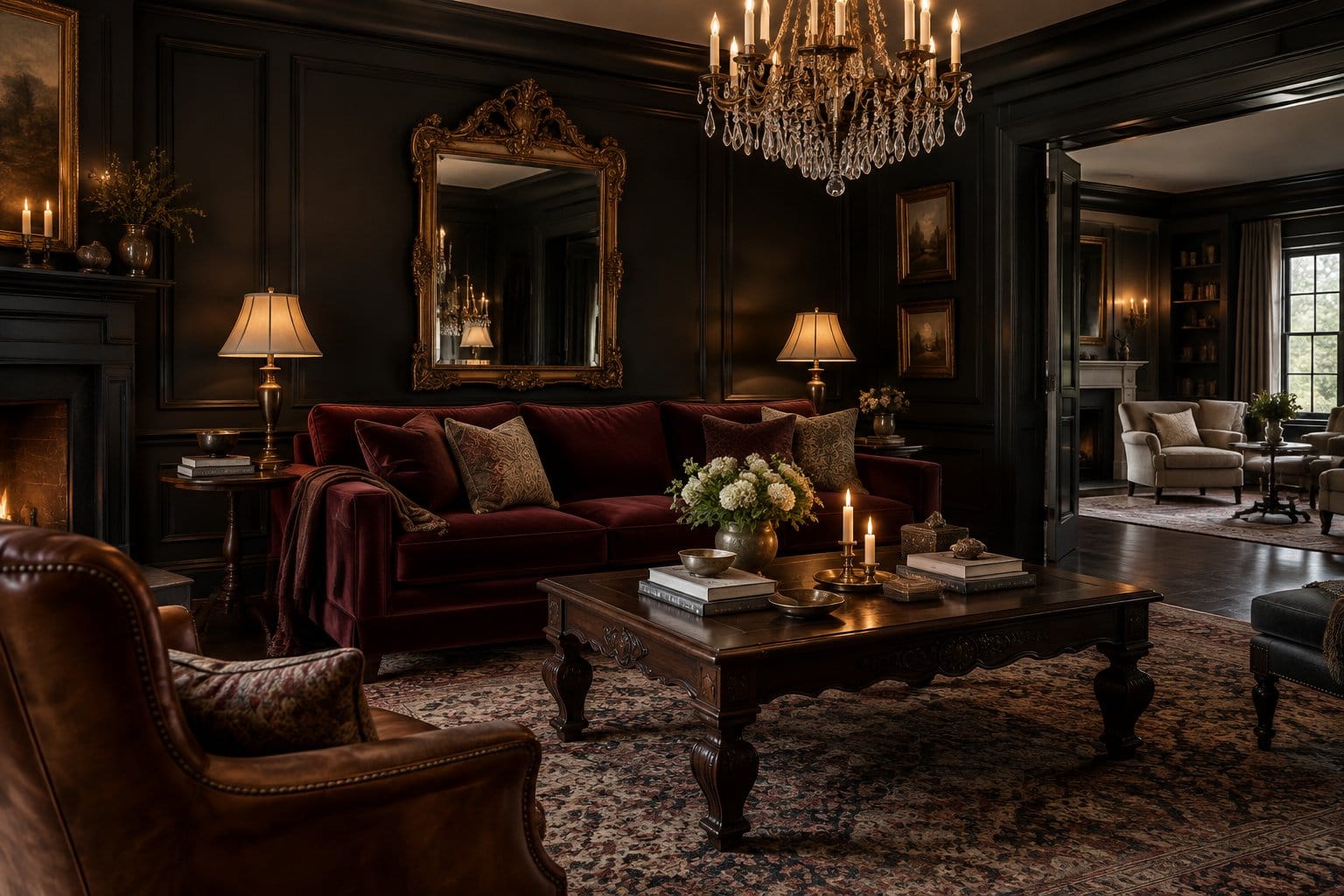
Start with one anchor, then layer color, texture, and light around it. Gothic rooms look best when they feel built slowly.
Which Piece Should Anchor the Room?
Pick the biggest thing the room needs anyway. In a living room, that’s the sofa or fireplace. In a bedroom, it’s the bed. In a kitchen, it’s the cabinets.
Once you choose, keep other big pieces calmer. A Chesterfield, a canopy bed, and a tapestry all in one room fight for attention. Let one piece be loud and give everything else a supporting role.
A good test: if a guest walked in, which item would they notice first? That’s your anchor. Build around it.
How Do You Keep Dark Colors from Flattening the Space?
Dark rooms go flat when everything is the same shade and finish. Mix textures: velvet, leather, carved wood, iron, and glass. Light catches each one differently.
Layer lighting. Use a ceiling light, two or three lamps, and one accent light, like a picture light over art. Keep bulbs warm, around 2700K.
Add a metallic, like brass or gold. A few gold frames or candlesticks give the eye something to catch. A single lighter element, like a cream rug or white bedding, also keeps depth.
Where Is It Worth Spending More?
Spend on things you touch daily and things that are hard to replace:
| Spend more | Save |
|---|---|
| Sofa and bed | Frames and prints |
| Rugs | Candleholders |
| Cabinets | Window film |
| Chandelier (quality wiring) | Bookends and small decor |
Thrift carved furniture and gold frames. Buy new for upholstery and anything electrical. The Raven Attic’s home decor ideas are handy for spotting budget finds that punch above their price.
Adapting Gothic Style to Your Home
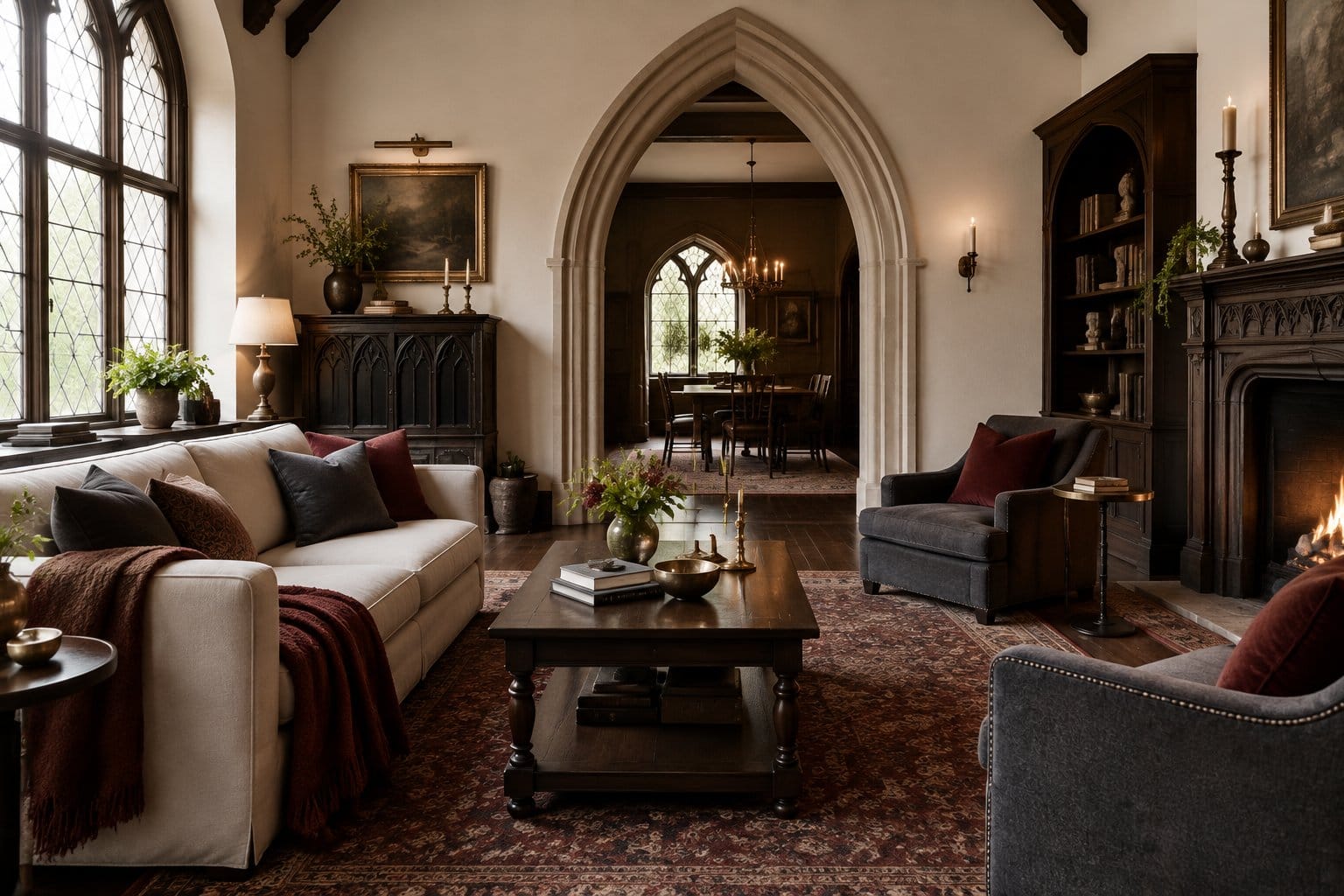
Every home can go gothic, but rentals, small rooms, and structural changes each call for a different approach.
What Works in a Rental?
Focus on things you can take with you:
- Stained-glass window film
- Peel-and-stick damask wallpaper
- Velvet curtains on tension or damage-free rods
- Tapestries and gallery walls
- Plug-in wall sconces and table lamps
- Rugs, bookends, and candleholders
Ask your landlord before painting. Many allow it if you repaint before leaving. Black iron wall candle sconces hang on a couple of small nails and add gothic flair without wiring.
How Do You Scale the Look for a Small Room?
In small spaces, pick one dark wall and keep the rest medium tone. Use a mirror to bounce light.
Choose pieces with legs, like a wingback chair, so you can see floor underneath. Vertical elements, like tall curtains and arched mirrors, draw the eye up.
Skip heavy pieces that crowd the room. A tapestry gives big impact without taking floor space.
Which Changes Need Professional Installation?
Some projects need a pro for safety and code reasons:
- New electrical fixtures: Adding a fixture where there wasn’t one usually needs a permit.
- Fireplace surrounds: Materials near heat must be non-combustible.
- Clawfoot tubs: Plumbing and floor load checks.
- True arched doorways: Framing changes.
- Cabinet replacement: Plumbing and counter work.
Swapping hardware, adding medallions, painting, and wallpaper are fine DIY jobs.
Frequently Asked Questions
How can I make a small space feel gothic without crowding it?
Use wall treatments, lighting, and textiles, which add mood without taking floor space. A burgundy accent wall, velvet curtains, and an arched mirror do a lot in a small room. Keep furniture to a few pieces with visible legs.
What gothic interior design ideas work best in a living room or den?
A black velvet Chesterfield, a wrought-iron chandelier, and a damask feature wall make the strongest living room trio. Add a wingback chair and amber lamps for a reading corner. Gothic-arch bookcases work great in dens.
How can I bring gothic style into a kitchen?
Black cabinets with brass hardware are the biggest move. Checkerboard floors, a candle-style chandelier over the island, and botanical prints add more. Keep counters light so the kitchen stays easy to use.
Can I create a gothic look without painting the walls black?
Yes. Deep burgundy, emerald, and navy all read gothic, and you can skip paint entirely with wallpaper, tapestries, and dark furniture. Warm lighting and ornate shapes carry most of the look.
How do I make gothic decor feel lived-in rather than Halloween-themed?
Choose quality materials, like velvet, wood, and brass, and limit skulls and bats to a few accents. Old books, real plants, and worn leather make a room feel lived in. For crossover pieces, these gothic Halloween decor ideas you can use all year help you keep only what works past October.